Last updated November 22, 2026
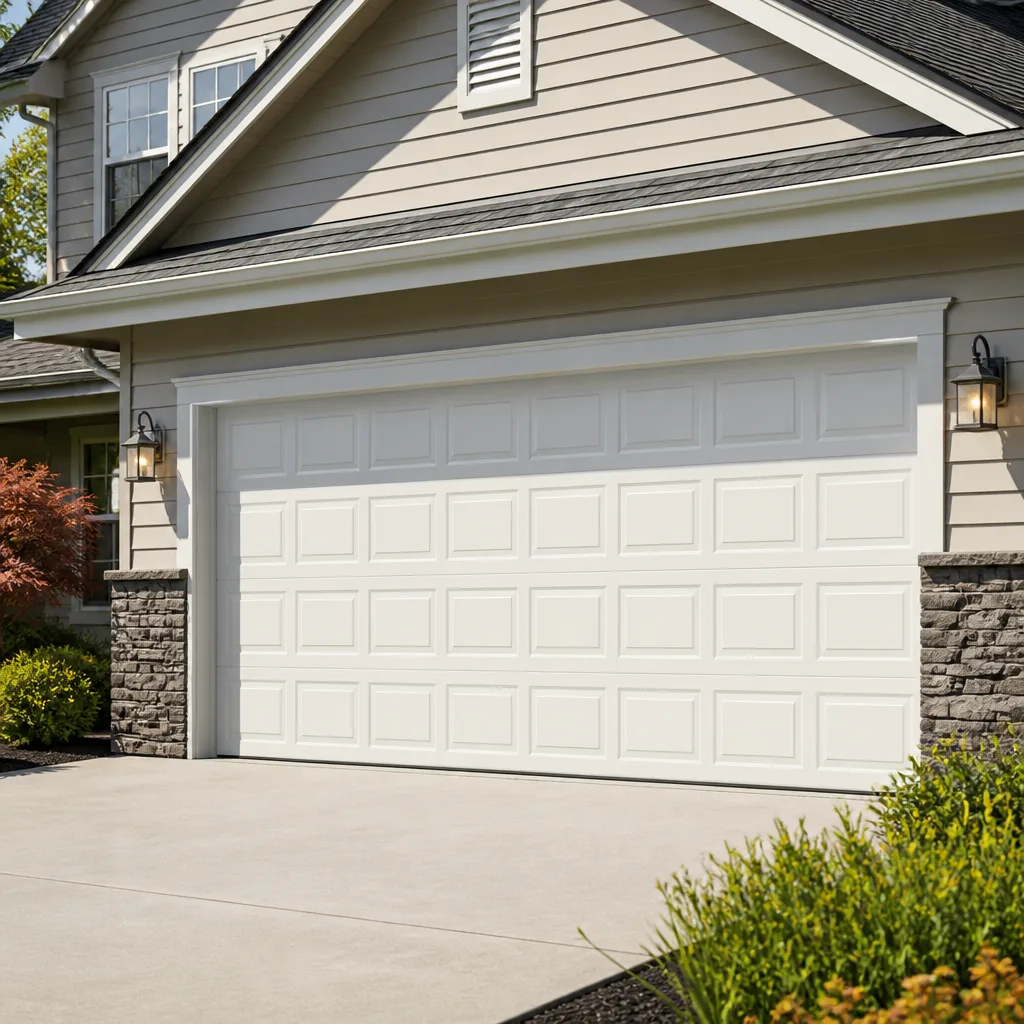 Raised-panel steel
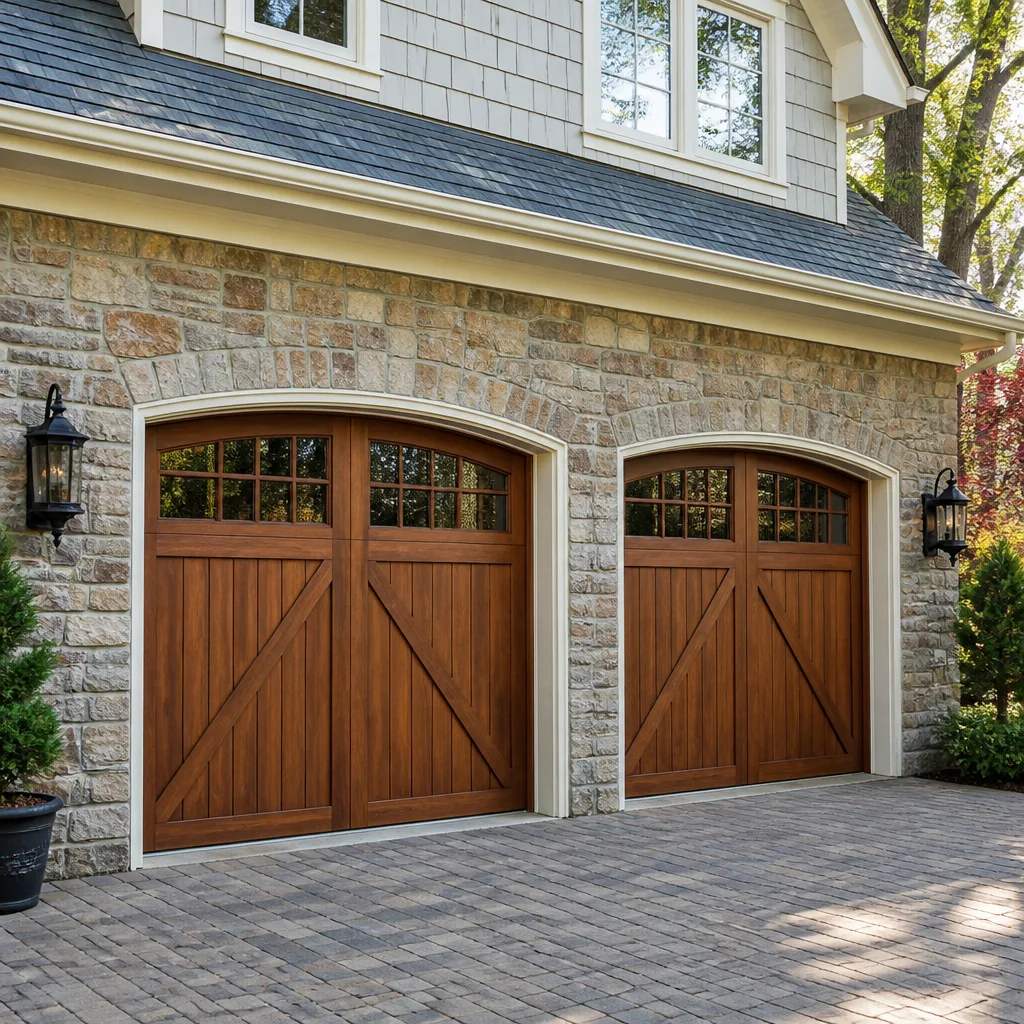 Carriage house
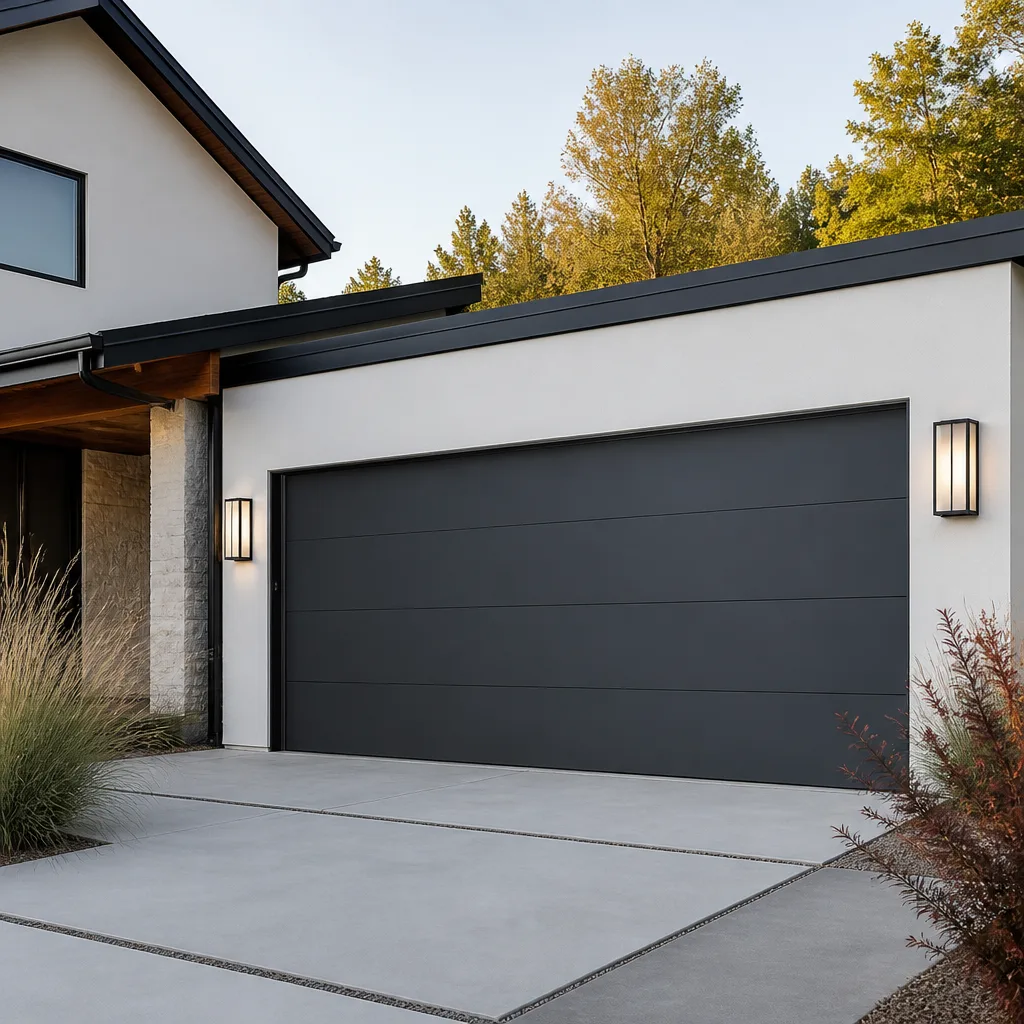 Modern flush
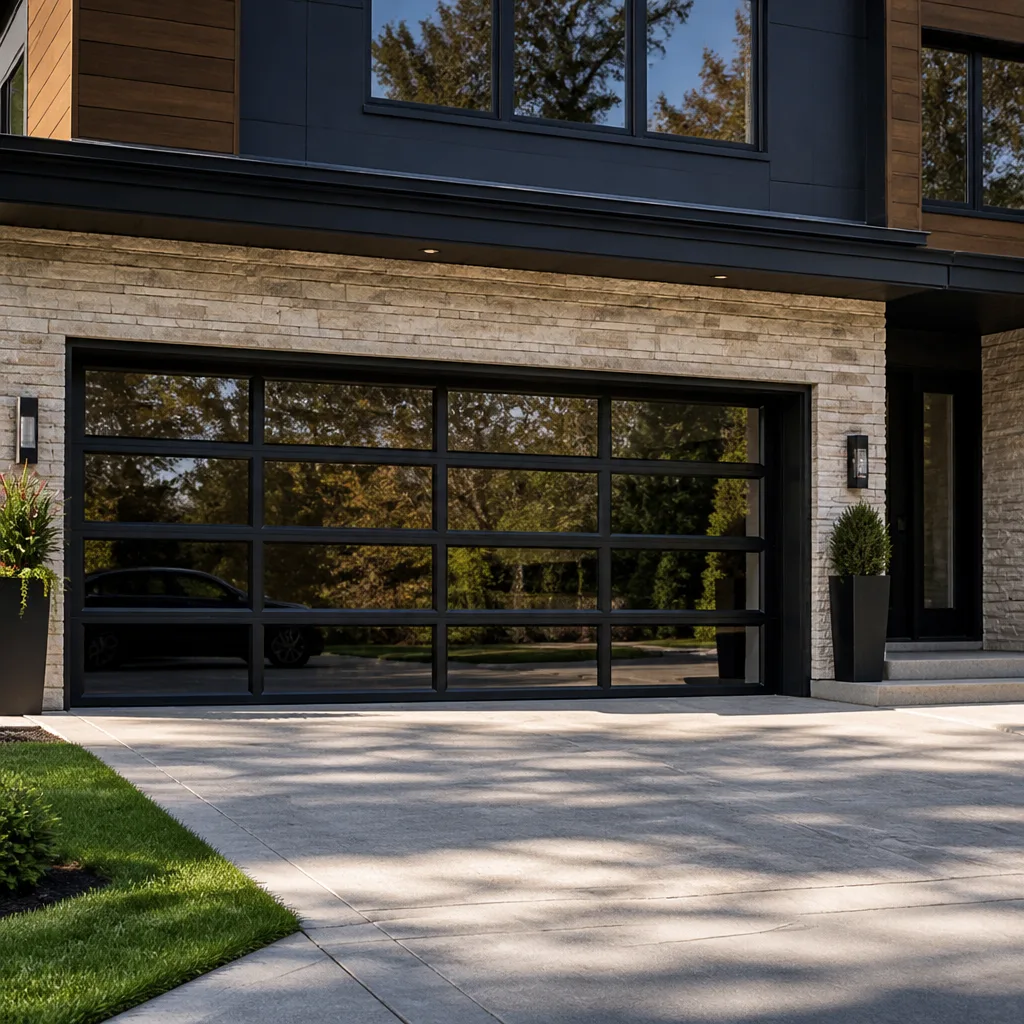 Full-view glass
 LiftMaster openers
 Chamberlain openers
Full 25-point door and opener safety check with every visit - springs, cables, rollers, tracks, and your LiftMaster or Chamberlain opener included
You get a price before we start. It does not change when the pro arrives.
Get your free estimateSeasonal Garage Door Care for Largo: Year-Round Homeowner’s Guide
The best time to find out your garage door can’t withstand a tropical storm is not during one – but that’s exactly when most Largo homeowners discover it. Garage doors fail under pressure in predictable ways, and the warning signs show up weeks before a storm makes landfall. Here’s the counterintuitive part: the season most people worry about isn’t the one that breaks the most springs. Largo doesn’t run on four equal seasons. It runs on a pre-hurricane window, hurricane season, post-storm recovery, and a short dry stretch, and each one asks something different of your door. This guide walks you through what to check in each window, how to build a 12-month task calendar, and where the real risks hide in Largo’s climate.
Quick Answer
Seasonal garage door care in Largo means matching maintenance to the actual climate calendar: inspect and reinforce hardware in April and May before the June 1 hurricane season opens, test manual release and monitor alignment through the storm months, inspect tracks and springs after any tropical event, and treat December through March dry-season temperature swings as the highest-risk period for spring failures. Lubrication, balance checks, and photo-eye testing tie the whole year together.
Styles & brands we work with
- Raised-panel steel
- Carriage house
- Modern flush
- Full-view glass
- LiftMaster openers
- Chamberlain openers
Table of Contents
- Why Garage Door Care in Largo Doesn’t Follow the Standard Four-Season Calendar
- Pre-Season Checklist (April-May): Before the June 1 Hurricane Season Opens
- Active Hurricane Season Protocol (June-November)
- Post-Storm Inspection: What to Look For Beyond Visible Damage
- Florida Dry Season Care (December-March): The Highest-Risk Window for Springs
- How to Build a 12-Month Garage Door Task Calendar for Largo
- When to Call a Professional
- Frequently Asked Questions
Why Garage Door Care in Largo Doesn’t Follow the Standard Four-Season Calendar
Most garage door maintenance advice is written for places with distinct temperatures and slow seasonal transitions. That advice assumes the door gets a long, easy spring reboot, a hot summer, a fall cooldown, and a winter rest. Largo residents live under a different clock. Here the year is defined by one dominant event – the Atlantic hurricane season that opens June 1 – and everything else is either preparation or recovery.
That shift in framing matters because it changes when you spend money, when you spend a Saturday afternoon, and when you decide a small problem is actually a project. You aren’t servicing your door to make it last an extra decade on paper. You’re servicing it so it still closes tight, still locks, and still tracks straight when a system is bearing down on Tampa Bay and you can’t afford a service call in the middle of it.
Largo’s housing stock adds a twist. Many homes here have doors and openers that were installed years before smart openers and torque-tube counters became the default, which means the equipment varies widely – a Clopay panel door with a chain-drive opener in one driveway, a Wayne Dalton door with a belt drive in the next. Brand-agnostic care is not optional; the right task list depends on what’s actually bolted to your garage ceiling.
What follows is the version we use in practice, organized by Largo’s real calendar rather than a generic one. Each section stands on its own if you’re mid-season and looking for one answer.
Pre-Season Checklist (April-May): Before the June 1 Hurricane Season Opens
The April and May window is the one most homeowners skip, and it’s the one that pays off the most. By June 1, the Atlantic hurricane season is officially open, and the time to learn your door’s weaknesses is behind you. The goal here is to catch the things that a trained eye can spot now and that become real hazards under wind load.
Run these checks yourself first. Anything that fails, get it looked at before the season rather than after.
- Test the opener’s reversal. Place a roll of paper towels flat under the door and close it. The door should reverse on contact. If it just squashes the roll and keeps going, the safety system is compromised.
- Inspect the weather seal along the bottom. Cracked, torn, or flattened seals let in rain and wind-blown debris. A seal that’s separating from the door is a flag that the panel edge is taking strain.
- Check track alignment by eye. Look at the vertical tracks on both sides. They should be plumb and straight. Gaps at hinges or rollers that bind indicate a track that’s shifted.
- Look at the hinges and rollers. Worn rollers make the door noisy and put strain on the opener motor. Cracked hinges can separate from the panel under pressure.
- Test the manual release. Pull the red cord and lift the door by hand. It should lift smoothly and stay up. If it drops or fights you, the spring or balance system needs attention.
- Assess the door’s wind rating if you can find the label. Florida code requires doors to be rated, but older homes sometimes have doors installed before current standards. If you can’t find a rating label, a professional can help you assess it.
- Consider door reinforcement if your door is a standard panel door in an exposed position. A reinforced door with proper bracing is what a wind-rated installation looks like; a bare door is not.
If any of these fail, the fix is usually straightforward now and becomes an emergency later. If your door is off-track or a spring looks to be sagging, this is the moment for a professional inspection.
Active Hurricane Season Protocol (June-November)
Once the season opens, the job shifts from conditioning the door to being ready for a power outage and watching for anything that changes. Most garage door failures during a storm aren’t catastrophic – they’re small problems that get worse when you’re stuck without power and can’t open the door to see them.
The manual release is the piece homeowners most often get wrong. The lever that disengages the opener is a simple mechanism, but you should practice using it before you need it. Here’s the safe sequence:
- Verify the door is fully closed.
- Locate the release cord attached to the carriage on the opener rail.
- Pull the cord firmly and straight down. This disengages the carriage from the trolley.
- With the door disengaged, lift the door by hand from the bottom center. It should move smoothly.
- To re-engage, close the door fully, pull the cord again to re-seat the carriage, then run the opener a few inches to confirm it catches.
Never leave a disengaged door open and unattended. And do not try to force a door that’s jammed after a storm – if the track is bent or the panels are out of alignment, force is more dangerous than helpful.
During the active season, check your door after any heavy weather: hours of wind-driven rain and pressure swings are the times when a track can shift a fraction of an inch and you won’t notice until the next close. Coat hinges, rollers, and the spring with a garage-door-specific lubricant every 60 to 90 days during the season. And listen – a new rattle, a new squeal, or a door that closes unevenly is worth a look.
Post-Storm Inspection: What to Look For Beyond Visible Damage
Visible damage is the easy part. The dents, the cracked panels, the obvious. The part that matters after a tropical event is the invisible damage – the shifts that don’t show up until your door refuses to close three weeks later. This is where Largo shows its real entry point into the repair world: post-storm, a lot of doors are technically intact but functionally compromised.
Here’s what to check after a storm, in order of priority:
- Track alignment shifts. Pressure differentials and sudden gusts can push a vertical track a fraction of an inch out of plumb. That’s enough to make the door bind. Watch the door for a slow or jerky closing motion and inspect the tracks with a level if you have one.
- Spring tension changes. A spring that’s stretched or lost tension will make the door feel heavy. Open it by hand and see if it feels heavier than before the storm. A sudden change is a warning sign.
- Panel and hinge separation. Walk the door and look for gaps at the hinge points. A panel that’s shifted against its neighbor can crack along the seam later.
- Opener strain. If the door sounds slower or the opener labors, stop using it. Running a door with a strained spring is a fast way to break the motor.
- Rail and bracket bolts. Check the bolts where the opener rail meets the ceiling bracket. A storm with a lot of vibration can loosen them.
- The bottom seal and side seals. If rain blew in under the door, the seal is no longer seated against the ground. Left alone, water intrusion can damage the door edge and the track base.
If everything checks out, you’ve done the most important post-storm task: confirming that what’s wrong isn’t hidden. If any of it is off, don’t wait for it to fail. When we visit for garage door repair, the first thing we do is check the tracks and springs against their pre-storm state, because that’s where the real damage hides.
Florida Dry Season Care (December-March): The Highest-Risk Window for Springs
Here’s the counterintuitive part of Largo’s climate: the season most people think of as the easy months is actually the riskiest for spring failures. The reason is temperature swing. A Largo winter day might start cool and finish warm, and the same swing that makes the weather pleasant is what stresses a torsion spring. Metal expands and contracts with temperature, and a spring that’s already near the end of its cycle tolerance will show the strain here.
Reduced lubrication loss is the second factor. Humidity and summer rain keep a certain amount of ambient moisture around the door, but the dry season strips that away, and a spring or hinge that isn’t lubricated will lose its protection and start to wear. This is the time to:
- Lubricate the springs, hinges, and rollers. A garage-door-specific lubricant, not WD-40 or a general spray. Silicone-based is best for spring coils.
- Test the balance of the door. Disengage the opener and lift the door halfway. It should stay in place. If it drops, spring tension is gone. If it rises, the spring is over-tensioned.
- Check for rust or corrosion on the springs. Corrosion can look like a small spot that quickly becomes a failure point.
- Test the opener’s force settings. A door that needs more force in dry season is telling you the balance is shifting.
- Inspect the drum and cables. Look for frayed cable, not just at the ends but along the length. A cable that’s fraying is a wait for a break.
If a spring fails in Largo during the dry season, it’s usually a sudden break, not a slow decline. That’s why January and February generate as many spring-repair calls as any summer month. Dedicated garage door spring repair is a safety-critical service for a reason: a torsion spring under load can cause serious injury if it’s handled casually, and it’s not a job for a homeowner with a vice grip and a YouTube video.
How to Build a 12-Month Garage Door Task Calendar for Largo
A real maintenance calendar for Largo pairs each task with the season that makes it most useful. Here’s the version we recommend, with realistic time estimates.
| Month | Task | Time |
|---|---|---|
| January-February | Spring and cable inspection; dry-season lubrication; balance test | 20-30 min |
| March | Full door and opener inspection; weather seal check | 30-45 min |
| April-May | Pre-season reinforcement check; run all pre-season checklist items; manual release practice | 45-60 min |
| June | Post-verify opener force and reversal; check track alignment | 20-30 min |
| July-August | Lubrication refresh; listen for new noises; check for track shift after storms | 15-20 min |
| September-October | Post-storm inspection after any tropical event; spring tension check | 30-60 min |
| November | Pre-winter lubrication; close-season hardware check | 20-30 min |
| December | Year-end review of any noise, alignment, or force changes; plan for the dry season | 15-20 min |
This calendar assumes you’re doing the light work yourself. Professional inspections fit between tasks – one before hurricane season and one after the dry season is a realistic cadence. If you’d rather not run any of it yourself, or you have an opener from Genie or a door from Amarr you’re not sure about, the Largo Garage Door Repair team can take the whole calendar off your hands. We work on the eight major brands, so the task list matches your actual equipment rather than a generic one.
A short note on what makes the calendar different from a generic one: the April-May window is longer here (you get about eight weeks before the June 1 deadline), the active season is five full months, and the dry season is short enough that any spring issue has to be caught quickly. Time estimates reflect that.
See the difference
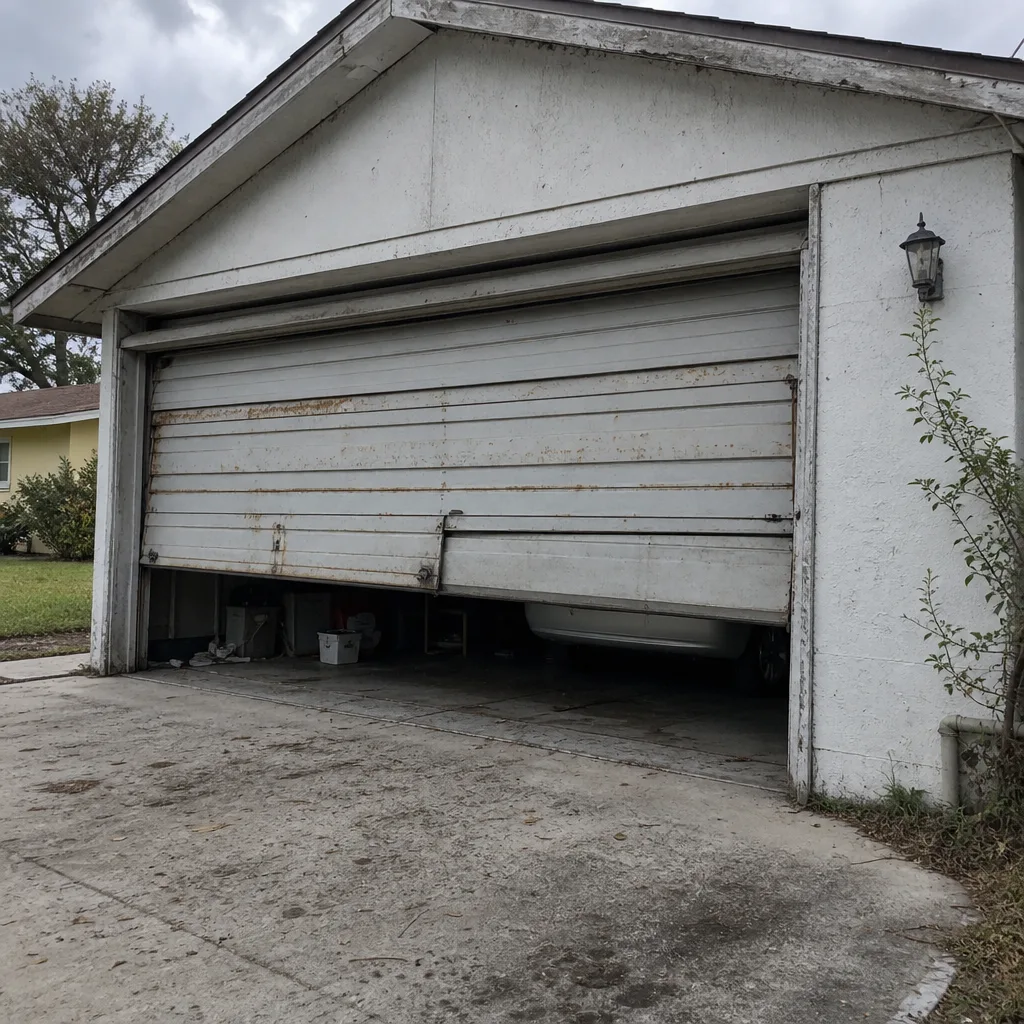 Before
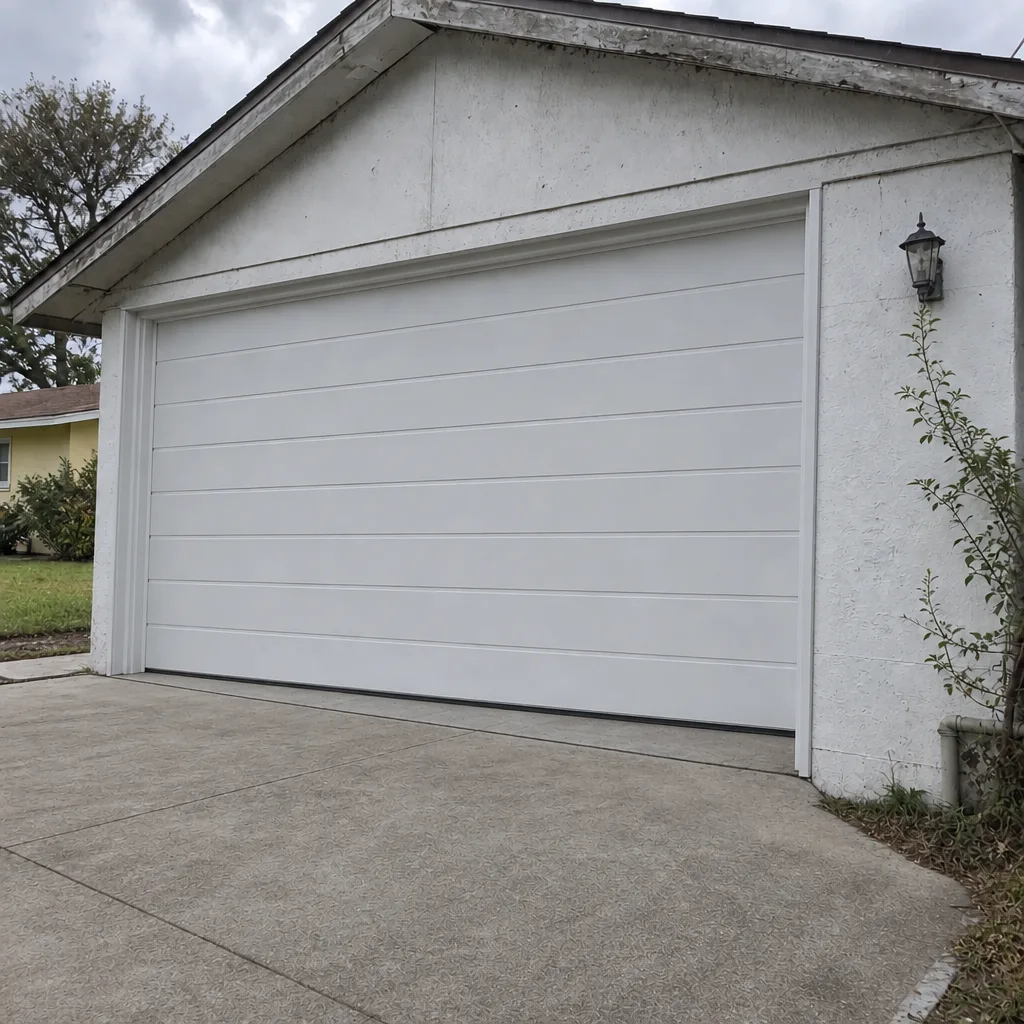 After
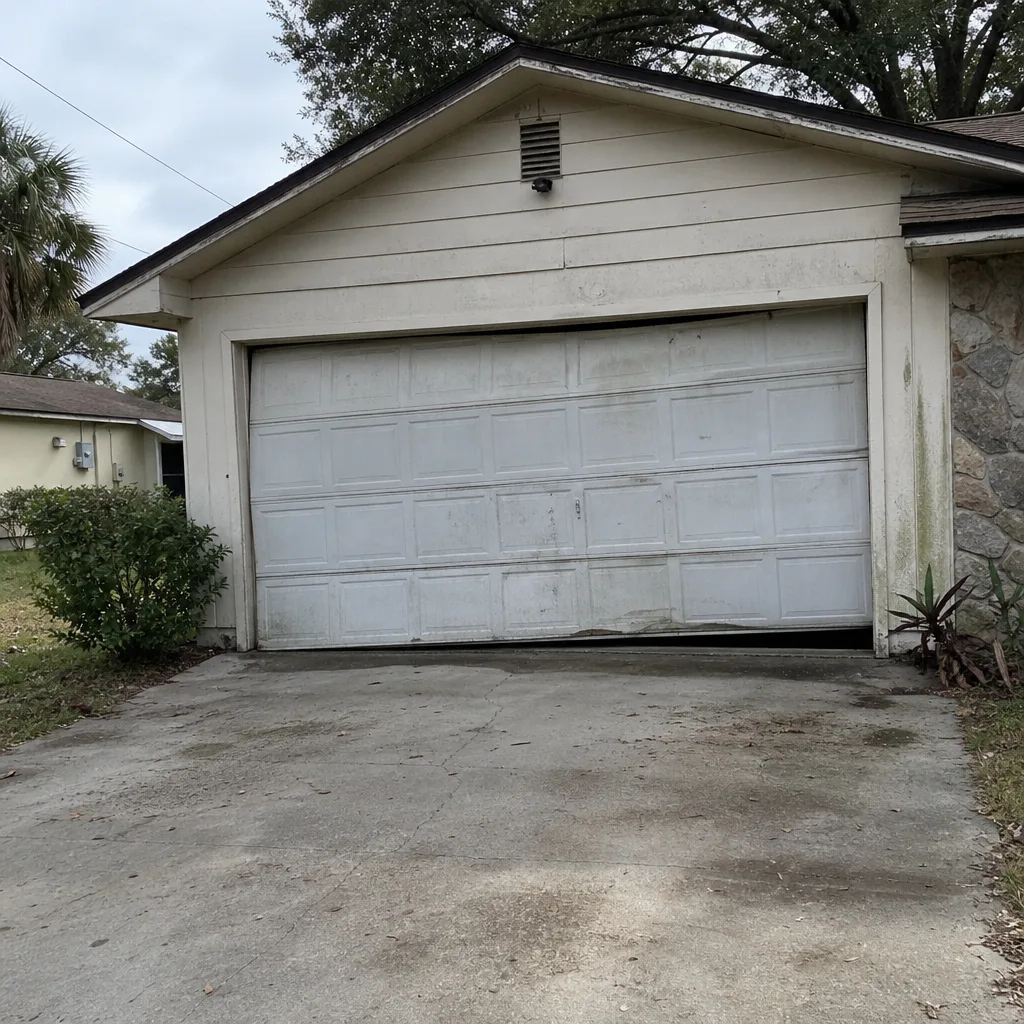 Before
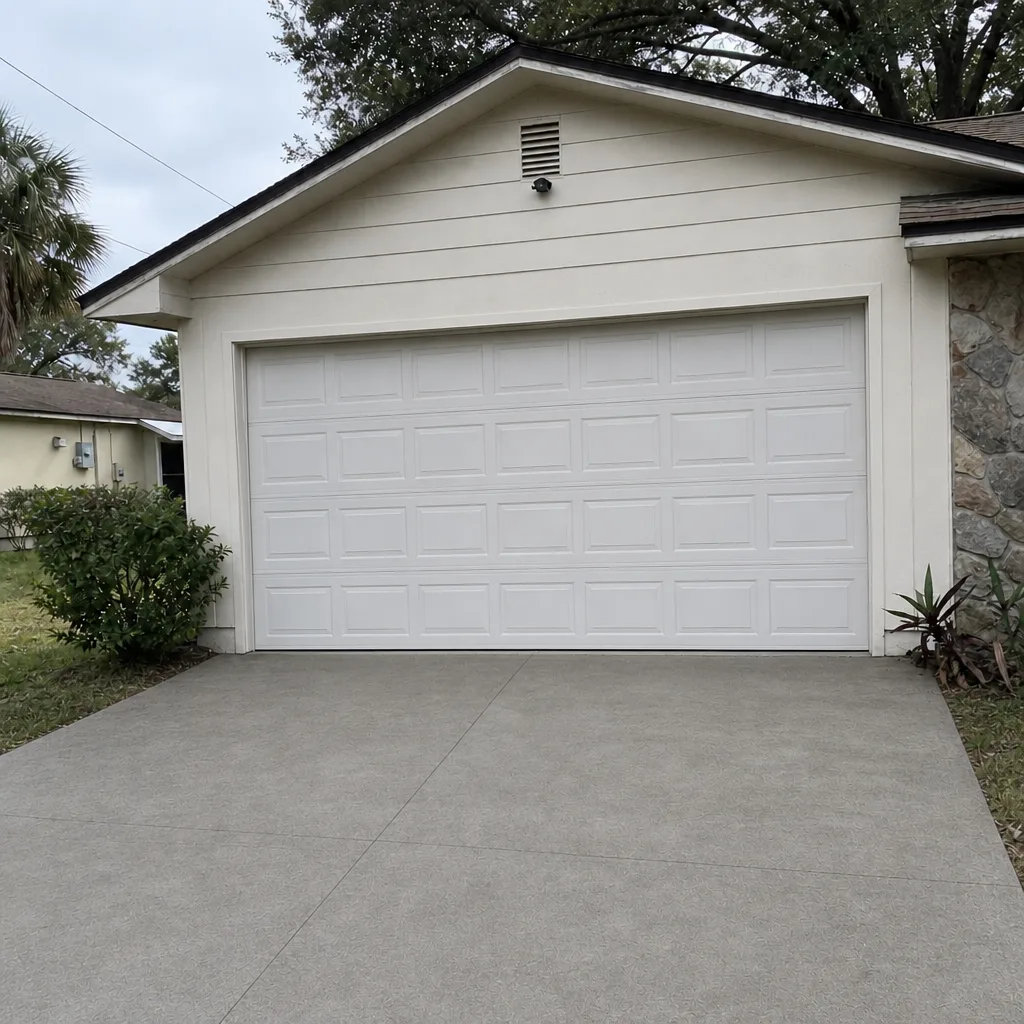 After
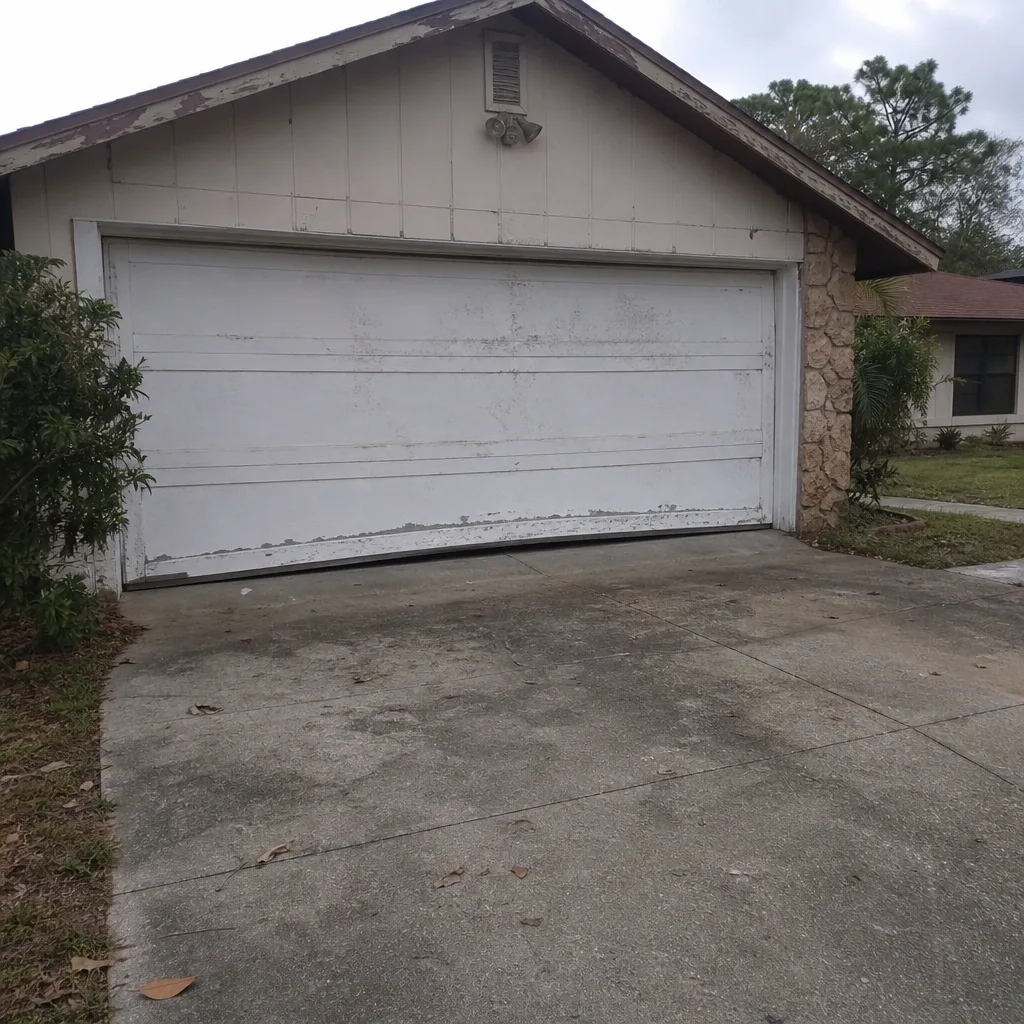 Before
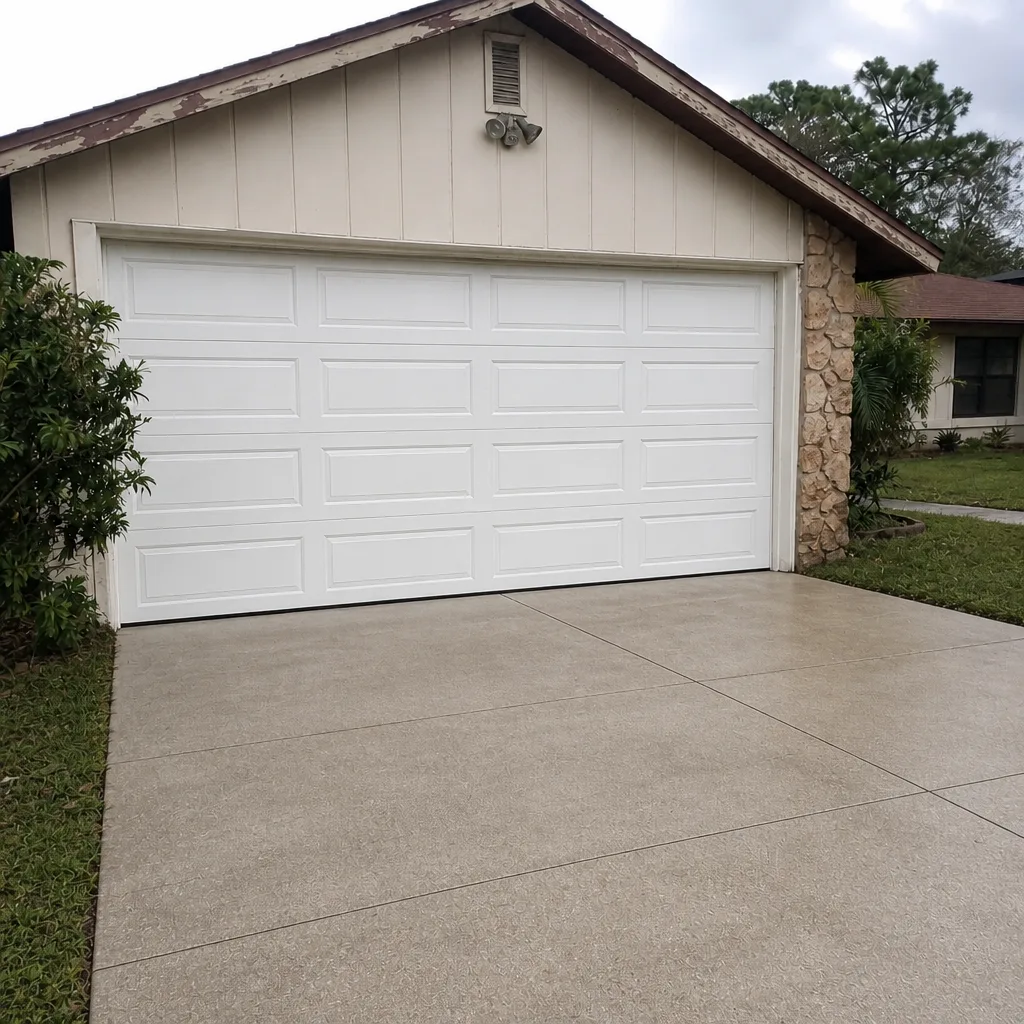 After
Common Mistakes to Avoid
- Treating April and May as the quiet months. This is the exact window when Largo homeowners should be testing manual release and checking the tracks, but it’s the window when they’re usually not. The result is discovering a problem during the first storm.
- Ignoring the dry-season spring risk. Many homeowners think springs fail in the heat of summer. In Largo, the temperature swing of December through March is just as likely to snap a spring that’s near end-of-life. If your door sounds different in the winter, investigate.
- Using WD-40 or a general lubricant on the tracks. It attracts dust in a humid climate and gums up the rollers. Use a garage-door-specific lubricant and keep it off the plastic parts.
- Pulling the manual release without practicing. Homeowners who’ve never tested their release often find the cord frozen in place or the carriage stuck when they need it most. Pull it once a season on a calm day.
- Forcing a door that’s binding after a storm. A door that’s out of alignment will bend the track further if you keep running the opener. If it feels wrong, stop and get it looked at.
- Skipping post-storm checks because there’s no visible damage. Track alignment shifts and spring tension changes don’t always show. What you can’t see after a storm is often what causes the failure later.
- Assuming a newer opener removes the need for maintenance. A smart opener from LiftMaster or Chamberlain won’t prevent a worn spring or a misaligned track. The door is the system; the opener is just the motor.
When to Call a Professional
Some tasks belong on your calendar. Some belong with a trained technician. Call a professional if a spring looks bent, has a visible gap, or the door suddenly feels much heavier; if a cable is frayed or sagging; if the door is off-track or binding; if the opener strains, reverses unexpectedly, or won’t respond to the remote; or if your post-storm inspection turns up any alignment shift you can’t fix. Also call if you’re not sure – a free estimate is cheaper than a broken spring or a bent panel. We can work with your insurer if storm damage is involved, and our technicians have up to 15 years of experience. Largo Garage Door Repair offers free estimates in Largo – call (866) 515-4679.
Frequently Asked Questions
We recommend a light maintenance pass every 60 to 90 days during hurricane season (June through November) and a more thorough inspection once in spring (April-May) and once in dry season (December-March). Lubrication and a visual check of the springs and tracks are the quick monthly tasks; the seasonal checks cover manual release, track alignment, and balance. The high frequency matters because Largo’s humidity and storm months are harder on hardware than a stable climate would be.
Yes, because the time you need it is the worst time to learn it. A manual release that’s frozen or a carriage that won’t disengage is common after months without use. Practice on a calm day: pull the red cord, lift the door by hand, then re-engage. It takes five minutes and it’s the difference between getting your car out during an outage and being stuck.
Temperature swing is the main reason. Largo’s December through March has cool nights and warm days, and the constant expansion and contraction stresses a spring that’s near the end of its cycle tolerance. Dry air also strips lubrication, which accelerates wear on the coils. If your door sounds different or feels heavier in the winter, that’s not normal aging – it’s the season putting strain on the spring.
Check track alignment, spring tension, hinge separation, the bottom seal, and the bolts where the opener rail meets the ceiling. A door that closes unevenly or feels heavy is the main warning sign. If nothing looks off, you still want a quick visual walk of the door and a listen for new noises; that’s where the hidden problem usually shows up first. If anything feels wrong, call before running the opener again.
Lubrication, visual checks, weather seal inspection, and balance testing are all safe for a homeowner. Anything involving the torsion springs or the cables is not – those are under high tension and can cause serious injury if handled casually. For spring and cable work, call a trained technician. We approach spring failures carefully because the risk of injury is real, and a free estimate is a much better outcome than an emergency room visit.
We service eight major garage door and opener brands, including LiftMaster, Chamberlain, Genie, Clopay, Amarr, Wayne Dalton, Craftsman, and Raynor, covering most systems a Largo homeowner is likely to have. For garage door opener repair, we cover smart and connected models from LiftMaster, Chamberlain, and Genie. If you’re not sure of your brand, call (866) 515-4679 and we’ll identify it and quote the work.
The Bottom Line
Largo’s garage door care runs on a storm calendar, not a seasonal one. The April-May pre-season window is when you find out what can’t handle a tropical storm. The June-November season is when you practice manual release and watch for track shifts. Post-storm is when you look for the damage that doesn’t show. And the December-March dry season is when you schedule a spring inspection instead of waiting for a snap. Build a 12-month task list around those four windows, do the light checks yourself, and bring in a professional for springs, cables, and anything post-storm that doesn’t look right. Every price we give is quoted and agreed before any work starts, so there’s no surprise on the invoice.
Call (866) 515-4679 for a free estimate on any seasonal service, repair, or installation in Largo. Our technicians have up to 15 years of experience, and we’ll tell you exactly what’s wrong before we touch it.
Written by the team at Largo Garage Door Repair.