Last updated November 22, 2026
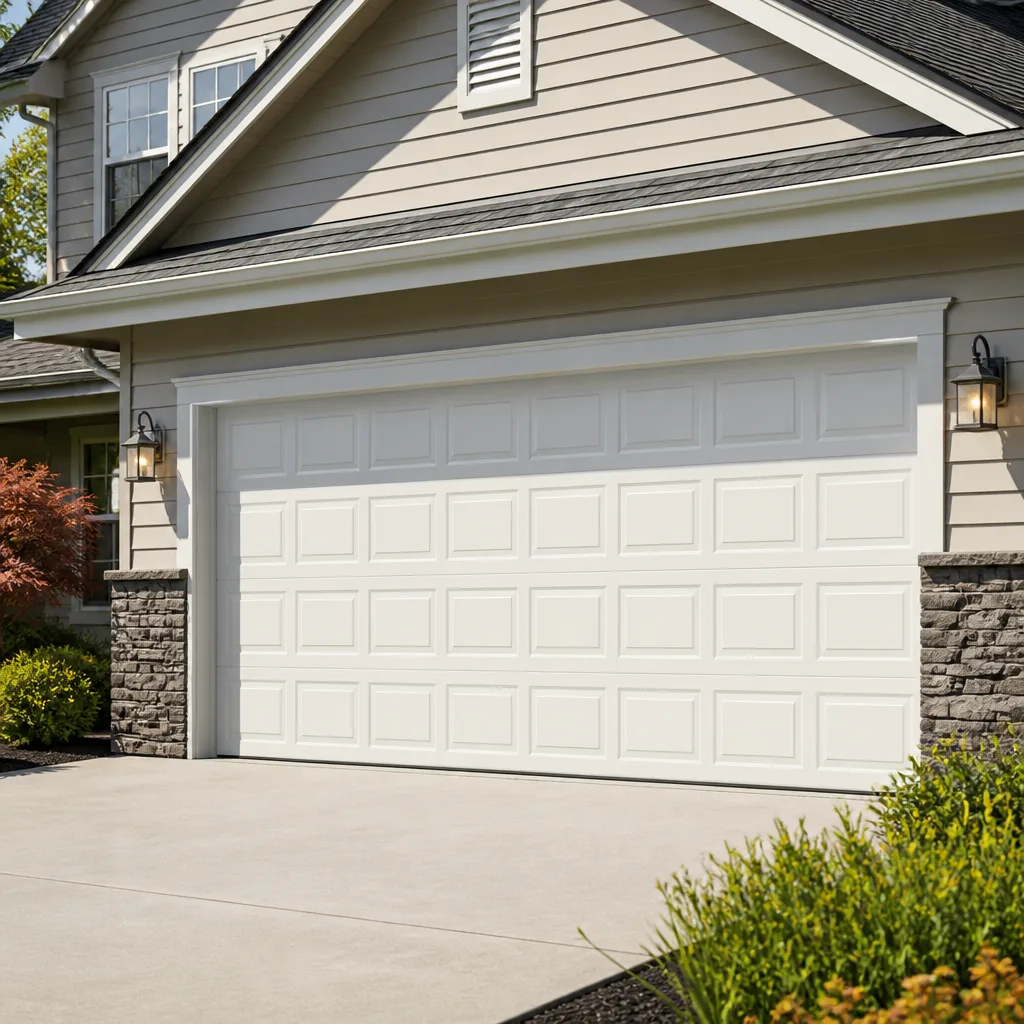 Raised-panel steel
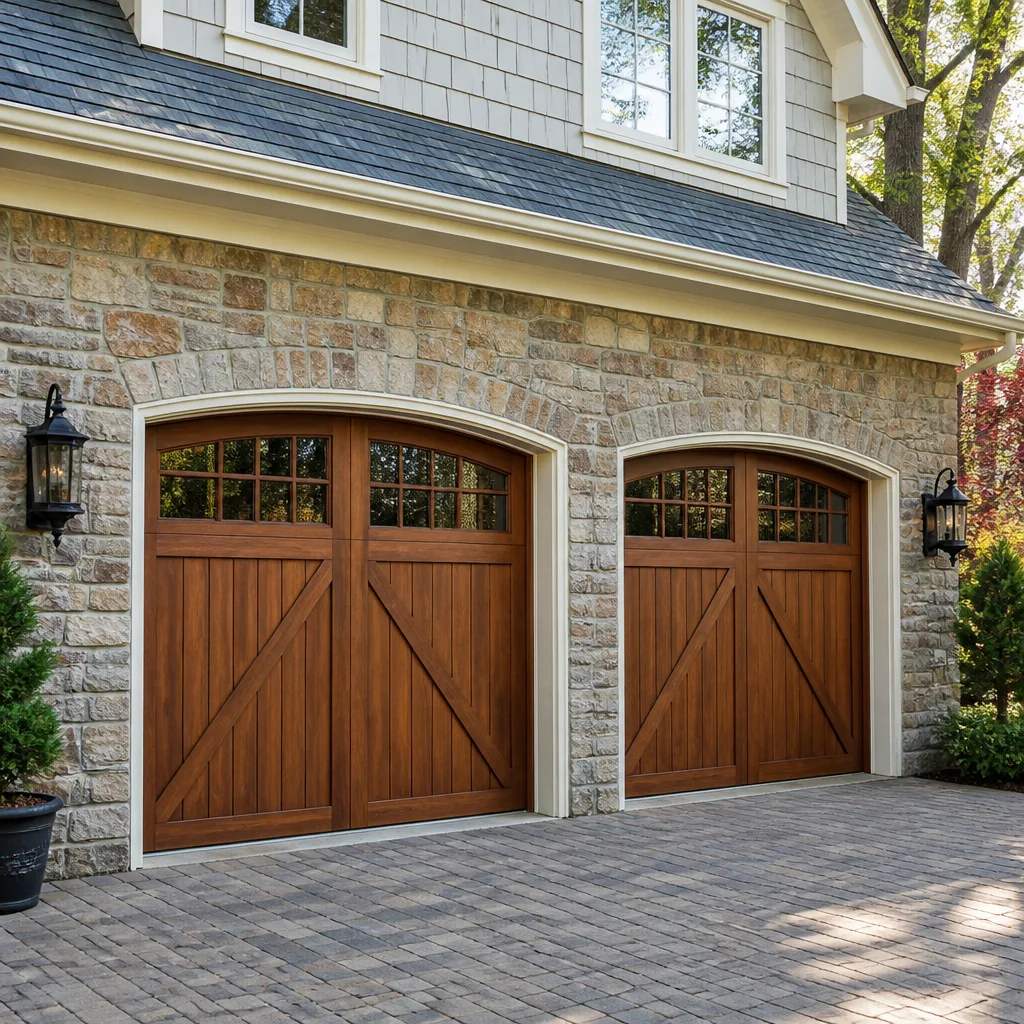 Carriage house
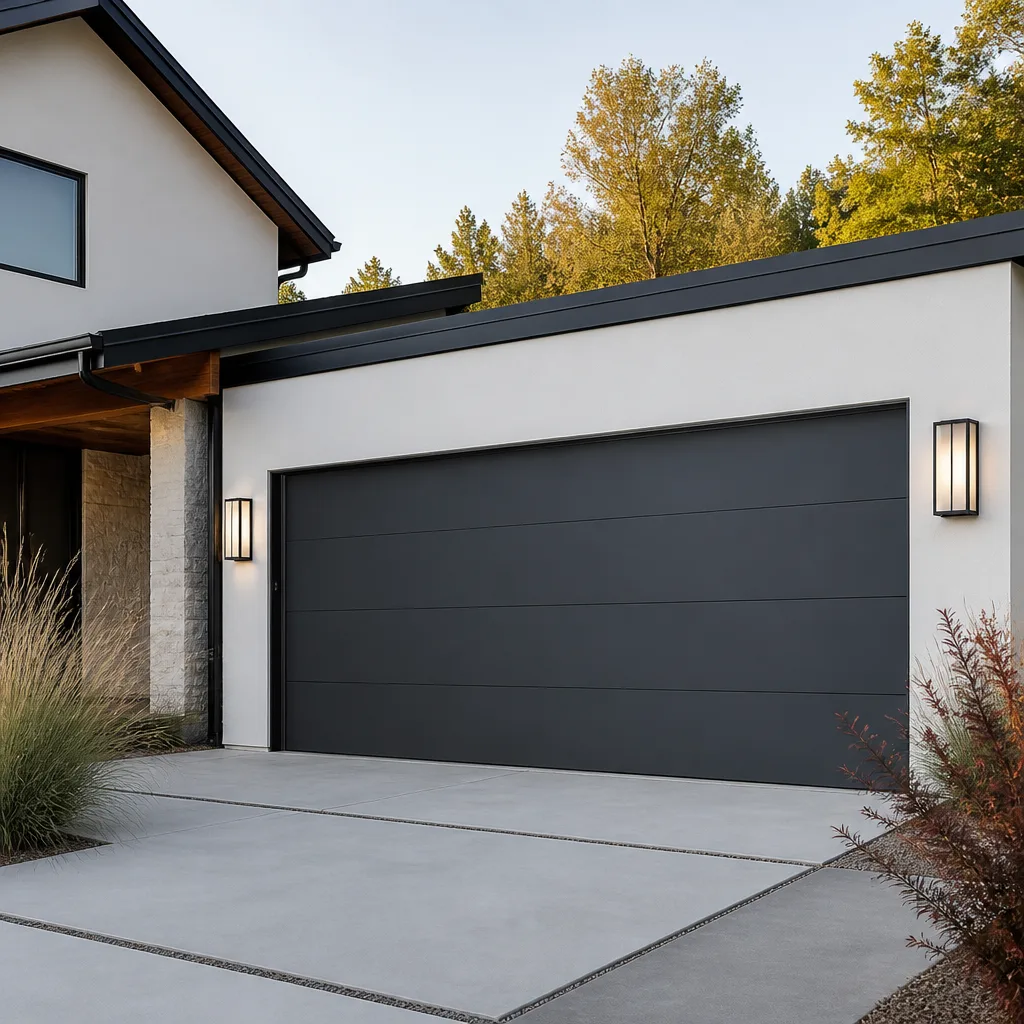 Modern flush
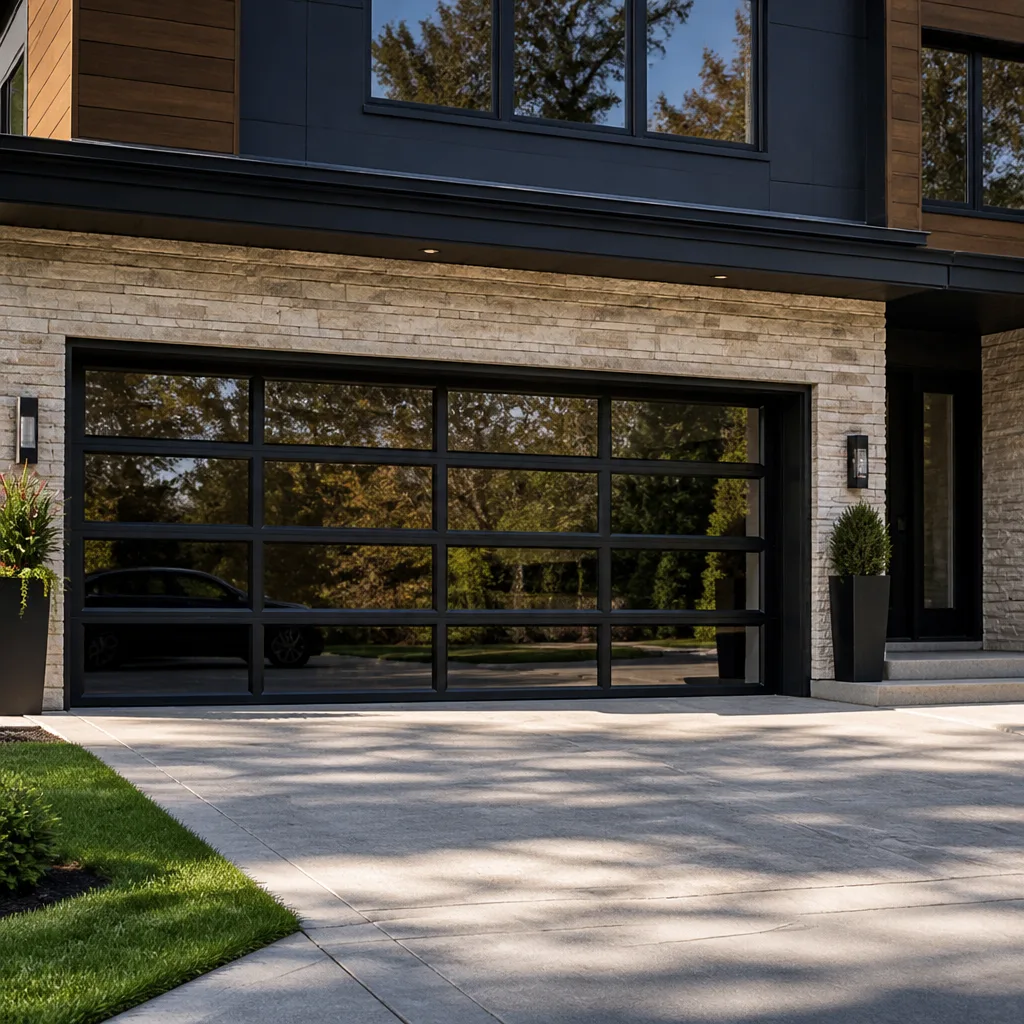 Full-view glass
 LiftMaster openers
 Chamberlain openers
Full 25-point door and opener safety check with every visit - springs, cables, rollers, tracks, and your LiftMaster or Chamberlain opener included
You get a price before we start. It does not change when the pro arrives.
Get your free estimateHow to Hire a Garage Door Contractor in Largo: A Step-by-Step Guide
Most homeowners hire a garage door contractor the same way they hire a plumber: they call whoever answers first, agree to a number over the phone, and hope. That’s the wrong instinct here, and it becomes a real problem after a storm. Florida has one of the highest volumes of unlicensed contractor complaints in the country, and garage doors land near the top of the list because the work looks simple from the driveway and almost nobody knows what “licensed” actually means in this state. In this guide we’ll walk through a vetting process you can run in under ten minutes, the exact line items your estimate should include, and how to tell a multi-brand specialist from a brand-exclusive dealer. Everything below applies to Largo homes specifically.
Quick Answer
To hire a garage door contractor in Largo, verify the contractor’s license through the Florida DBPR online lookup before you discuss price, request current general liability and workers’ compensation certificates, and insist on a written scope of work with itemized line items rather than a verbal quote. A legitimate contractor will hand over all three without hesitation. One who deflects any of them is telling you something important.
Styles & brands we work with
- Raised-panel steel
- Carriage house
- Modern flush
- Full-view glass
- LiftMaster openers
- Chamberlain openers
Table of Contents
- Why Vetting Matters More Here Than You’d Think
- How Do You Verify a Florida Contractor License in 60 Seconds?
- What Insurance Certificates Should You Request?
- Why a Written Scope of Work Beats a Verbal Quote
- The Five Line Items Every Garage Door Estimate Needs
- Red Flags Specific to Post-Storm Contractor Surges
- Multi-Brand Specialists vs. Brand-Exclusive Dealers
- The Ten-Minute Vetting Process, Start to Finish
Why Vetting Matters More Here Than You’d Think
Garage door work has a peculiar risk profile. The door itself seems mechanical and forgiving, but the springs, cables and torsion assembly carry enough stored energy to cause serious injury when handled carelessly. That’s not a scare tactic; it’s the reason spring work is the part of this trade most often mishandled. A contractor who is unlicensed is also, almost by definition, uninsured in any way you can confirm. If something goes wrong on your property, the liability question lands on you, not on them.
There’s a second layer in Largo. Pinellas County gets subtropical storm systems that push through in summer and early fall, and those systems send a wave of out-of-area crews door to door within days. Most of them are legitimate outfits working a storm circuit. Some are not. The difference is rarely visible from the business card.
Add the local housing mix to the picture. Largo has a large stock of ranch homes and older block construction from the mid-20th century, plus newer construction toward the east side of town. That means a contractor walking up your driveway might be looking at a 1960s wood-panel door with original hardware, or a modern insulated steel door with a smart opener. Older doors in humid climates like ours tend to have rusted hinges, sagging panels and track that’s shifted out of plumb. A crew that only knows one brand or one era of door will struggle with the other.
Here’s the part most guides skip: the vetting is fast. It doesn’t require a background check or a reference list. Florida puts the license information in a public database, and the insurance question is a document request. Ten minutes of your afternoon is the whole cost.
How Do You Verify a Florida Contractor License in 60 Seconds?
You verify a Florida garage door contractor’s license by looking them up in the Florida Department of Business and Professional Regulation (DBPR) online license portal, searching by name or license number, and confirming the license is active and matches the work being done. The lookup takes about a minute if you have the name or number in front of you.
The lookup itself is easy. Understanding what you’re looking at is where most homeowners get lost. Florida issues two license types that matter for your project:
- State Certified. A Certified contractor holds a license that’s valid statewide. They’ve met state-level requirements and can work anywhere in Florida without additional local registration.
- State Registered. A Registered contractor is licensed for a specific local jurisdiction. Their license is tied to the county or municipality that issued it and doesn’t automatically extend beyond that boundary.
Neither type is inherently better. What matters is that the license is active and covers the scope of work you’re hiring for. Garage door installation and repair falls under the general or specialty contractor categories depending on the nature of the job, and a contractor who says “we don’t need to pull permits” for a job that does require one is telling you the license might not cover that work either.
On the DBPR record itself, check four things:
- Status. It should read Active. Suspended, revoked, delinquent or null-and-void all mean stop.
- License type and scope. Confirm it’s a contractor category that covers garage doors, not something unrelated.
- Expiration date. An expired license isn’t a technicality; it means they’re currently unlicensed.
- Complaint history. The DBPR record shows disciplinary actions. One old complaint isn’t disqualifying; a pattern is.
Write the license number down. You’ll want it again when you look at the written estimate, because a real licensed contractor puts it on their paperwork. If the number on the estimate doesn’t match the DBPR record, that’s your answer.
If permits are required for your job, the permitting authority is the City of Largo’s building department, and they can tell you what’s required for a door replacement or structural modification. We can’t tell you which jobs need one without seeing the door, but the permit question is worth asking of any contractor before work starts. When we send a licensed local professional through our network for garage door repair in Largo, the permit question gets settled before the job is scheduled, not after.
What Insurance Certificates Should You Request?
You should request two documents: a Certificate of Insurance for general liability (GL) and one for workers’ compensation. Ask for both as current certificates, and confirm the policy dates haven’t lapsed. A certificate is only evidence of insurance as of its issue date, so look at the effective and expiration dates, not just the fact that a certificate exists.
General liability covers damage to your property. If a technician drops a door panel onto your car, GL is what handles it. Workers’ compensation covers injury to the workers on your property. If a technician is hurt while installing your door and the contractor doesn’t carry workers’ comp, the exposure can follow you as the property owner. That’s the reason the certificate matters as much as the license.
Three things to check on the certificate:
- The named insured matches. The company on the certificate should be the same company that quoted you the work. If the certificate is issued to a different entity entirely, ask why.
- The dates are current. Expired certificates are common, sometimes accidentally and sometimes not. Confirm the policy is in force for the dates your job will run.
- The coverage limits are reasonable. A policy with very low limits technically exists but won’t help if something substantial goes wrong.
If you want to go a step further, call the insurance carrier listed on the certificate and confirm the policy is active and the contractor is in good standing. Carriers will verify this information to a policyholder or a member of the public upon request. It takes a phone call.
A contractor who hesitates on the insurance request, promises to “send it over later,” or responds with anything other than a certificate within a reasonable window is giving you valuable information. There’s no legitimate reason to withhold proof of insurance.
Why a Written Scope of Work Beats a Verbal Quote
A written scope of work wins because it turns a conversation into a document you can compare, question and hold someone to. A verbal quote has no line items, no brand names, no part numbers and no stated exclusions. It’s a number, and the moment you shake hands on that number you’ve agreed to nothing specific.
On garage doors specifically, the gap between verbal and written is where surprise charges come from. A phone quote of “$X to fix the spring” doesn’t answer these questions:
- Are you replacing one spring or the matched pair?
- Are you using a spring that matches the door’s original weight rating?
- Does the price include balancing the door and testing the safety reverse?
- Are the rollers and hinges being replaced, or just inspected?
- Is the disposal of old parts included?
Each of those has a cost attached, and any of them can become an “and also” once the technician is on your property. A written scope prices all of them before anyone starts.
The same principle applies to openers and full installations. If you’re getting garage door opener repair involves specific parts, the scope should name the opener model and the parts being replaced. If it’s a new door, the scope should specify the door model, the panel material, the window inserts, the opener model if one is included, and the track and hardware being supplied. When a Largo homeowner receives a written scope with those details, they can compare it against another estimate apples to apples.
Ask yourself one question about any estimate you receive: could a stranger read this document and know exactly what’s going to happen on my door? If the answer is no, the estimate isn’t finished.
The Five Line Items Every Garage Door Estimate Needs
Every legitimate garage door estimate should include the license number, a description of the work with part numbers, an itemized parts and labor breakdown, stated exclusions, and the payment terms including whether a deposit is required. If any of those five are missing, ask for a revised estimate before you sign anything.
- License number and business identity. A real estimate carries the contractor’s Florida license number, physical address and a phone number. Cross-check the license number against the DBPR record before you go any further.
- A specific description of the work. Not “repair garage door” but “replace both torsion springs, model number listed, 3-inch ID, and rebalance door.” The specificity matters because it’s what protects you if the scope gets reinterpreted mid-job.
- Itemized parts and labor. Parts and labor shown separately, with brand names where relevant. If the estimate for a spring replacement doesn’t say which spring, you don’t know what you’re buying.
- Stated exclusions. What the estimate does not cover. Common exclusions include track realignment if the door has structural damage, opener replacement if the existing opener is beyond repair, and any trim or framing work. Knowing the exclusions up front prevents the “well, that wasn’t in the quote” conversation.
- Payment terms and deposit structure. When payment is due, whether a deposit is required, and what forms of payment are accepted. A contractor who demands full cash payment up front with no invoice is not a contractor you should be hiring for anything.
For spring work specifically, the estimate should confirm whether the price covers one spring or the matched pair. A matched pair is usually replaced together because the springs wear at the same rate, and a single-spring quote isn’t the same number as a pair quote. Ask before you compare prices, or you’ll be comparing two different jobs.
On our side, when we send a licensed local professional to your Largo home for garage door spring repair, the written estimate you receive includes all five line items. The price is quoted and agreed before any work starts, and the written estimate is the final word. You’ll know what the job costs before a tool comes out of the truck.
Red Flags Specific to Post-Storm Contractor Surges
The biggest red flag after a storm in Pinellas County is a contractor who shows up unannounced, offers to start today, and can’t produce a license number. Door-knocking itself isn’t illegal, and plenty of legitimate contractors canvass neighborhoods after a storm because that’s where the work is. The red flag is what happens when you ask for documentation.
Here are the specific patterns to watch for:
- Door-knockers who won’t leave a written estimate. They’ll quote you a number standing in the driveway and pressure you to decide on the spot. A real contractor will schedule a site visit, look at the door, and put the scope in writing.
- Cash-only demands. A contractor who wants cash and no invoice is avoiding a paper trail. This is not normal, and you should decline.
- “We don’t pull permits.” Sometimes this is true because the job doesn’t require one. When it’s offered as a selling point for a job that does require a permit, it’s a license problem in disguise.
- Out-of-state license plates and a PO box address. Not automatically disqualifying, but ask for a physical Florida business address and a license number you can look up.
- Pressure to sign today for a discounted price. Any contractor who needs an answer before you’ve had time to verify the license is telling you the license wouldn’t survive the check.
- No physical address on the estimate. If the paperwork doesn’t tell you where they’re located and what their license number is, you have no recourse if something goes wrong.
- Requests for full payment up front. Deposits are normal for installations. Full payment before work starts is not.
The storm surge also creates a comparison problem. You may get three quotes in a week, and the numbers will be all over the map. The reason is usually that the scopes don’t match. One quote is for a single spring, one is for a pair, one includes new rollers and one doesn’t. Before comparing prices, compare the scopes line by line.
Multi-Brand Specialists vs. Brand-Exclusive Dealers
For repair work, a multi-brand specialist is usually the better call because they can work on whatever you already own. For a new door, a brand-exclusive dealer can make sense if you’ve already decided on that brand. The difference matters most when something fails unexpectedly and you need a fix, not a sales conversation.
Garage door and opener brands are not interchangeable. A Genie opener and a LiftMaster opener have different logic boards, different remote frequencies and different troubleshooting paths. A Clopay or Amarr door has its own panel dimensions and hardware patterns. A technician who only services one brand will either decline the job or improvise. Improvising on a door that weighs between one and two hundred pounds is not what you want.
Multi-brand capability looks like this on paper:
- Repair of your existing equipment. You own a Chamberlain opener with a failing travel limit switch. A specialist who services Chamberlain can diagnose and repair it. A brand-exclusive dealer who only carries two other brands may push you toward a full opener replacement instead.
- Consistent diagnosis across brands. When the technician has seen enough Genie and LiftMaster failures to recognize the symptom pattern, diagnosis takes less time and costs less.
- No steering toward a preferred product line. A specialist with no brand allegiance recommends based on your existing system, not on what’s sitting in inventory.
- Single-company coverage from opener to panel. One contractor handles the spring repair, the opener replacement and the new door install. No handoffs between vendors.
The one case where brand-exclusive is worth considering: if you’re installing a new door and you’ve decided on a specific manufacturer’s product line, an authorized dealer of that brand will know the product catalog in depth. For repair, that depth matters less than the ability to work on what’s already hanging in your garage.
Our team at Largo Garage Door Repair services equipment from eight major brands: LiftMaster, Chamberlain, Genie, Clopay, Amarr, Wayne Dalton, Craftsman and Raynor. That covers essentially every system a Largo homeowner is likely to have, which means the recommendation is driven by your door, not by what we’d prefer to sell.
The Ten-Minute Vetting Process, Start to Finish
Here’s the entire process in order, from the first call to the signed estimate. You can run all of it in about ten minutes if you have the contractor’s license number and a browser open.
- Ask for the license number on the first call. Before you discuss price or schedule. If they won’t give it, the conversation is over.
- Look it up in the DBPR portal. Confirm the status is Active, the license type covers garage door work, and the expiration date is in the future. Note any disciplinary history.
- Request both insurance certificates. General liability and workers’ compensation. Check that the named insured matches the company, the dates are current, and the coverage limits are reasonable.
- Ask about permits for your specific job. For a door replacement or structural work in Largo, the City of Largo’s building department can confirm what’s required. A licensed contractor will know the answer; an unlicensed one will dodge it.
- Schedule a site visit for the written estimate. A contractor who quotes firm numbers over the phone without seeing the door is guessing. A site visit takes twenty minutes and produces an accurate scope.
- Review the five line items. License number, specific work description, itemized parts and labor, stated exclusions, payment terms. All five, in writing.
- Compare scopes, not just prices. If you have two estimates, put them side by side and match line item to line item. The lower number may be a smaller job.
- Confirm the price is locked before work starts. The written estimate should be the final price barring something the estimate couldn’t have anticipated, and any change should be agreed in writing before it happens.
That’s the whole thing. It’s not glamorous, but it’s the difference between a repair that holds for years and a repair that becomes a repair again in six months.
Common Mistakes to Avoid
- Calling the first number that answers. Speed feels like a priority when the door is stuck open, but the first number is often a national call center that dispatches whoever’s available. Ask where the technician is coming from and whether the company holds a Florida license.
- Accepting a verbal quote and scheduling on the spot. A verbal number is a starting point, not an agreement. The written scope is what protects you, and it takes a site visit to produce accurately.
- Skipping the insurance check because the license looked fine. A license and an insurance policy are separate documents. An active license doesn’t confirm the contractor carries workers’ comp, and that policy is what matters if someone gets hurt on your property.
- Comparing spring prices without checking single or pair. A Largo homeowner comparing two spring quotes may be comparing a one-spring job to a two-spring job. The numbers won’t make sense until you match the scope.
- Hiring after a storm without checking the DBPR record. The weeks after a storm system passes through Pinellas County are exactly when unlicensed crews are most active. Ten minutes in the DBPR portal is the single highest-value check you can run.
- Assuming the brand doesn’t matter. A tech who has never worked on your opener model will spend more time diagnosing and may recommend replacement when repair would do. Ask what brands they service before they come out.
- Paying the full amount before work starts. A reasonable deposit is normal for installations. Full upfront payment leaves you with no leverage if the work isn’t finished.
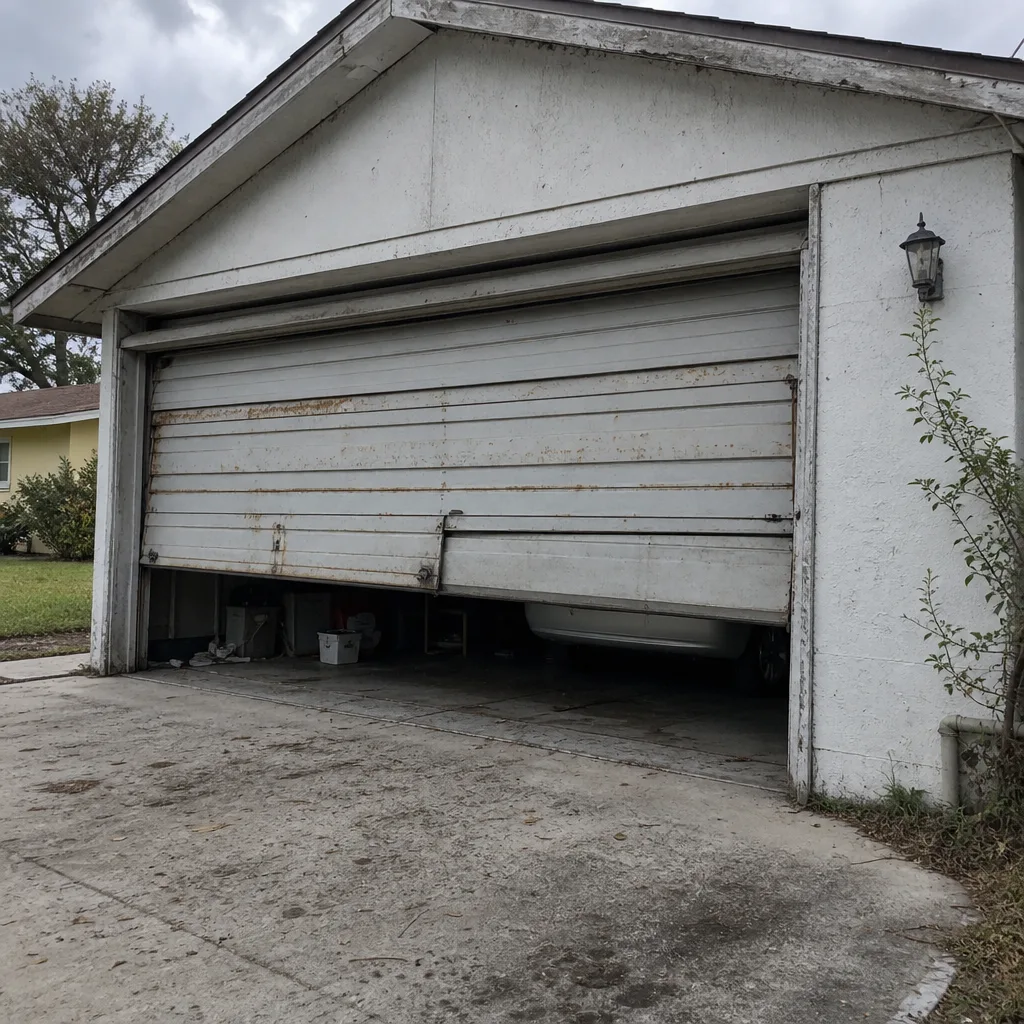
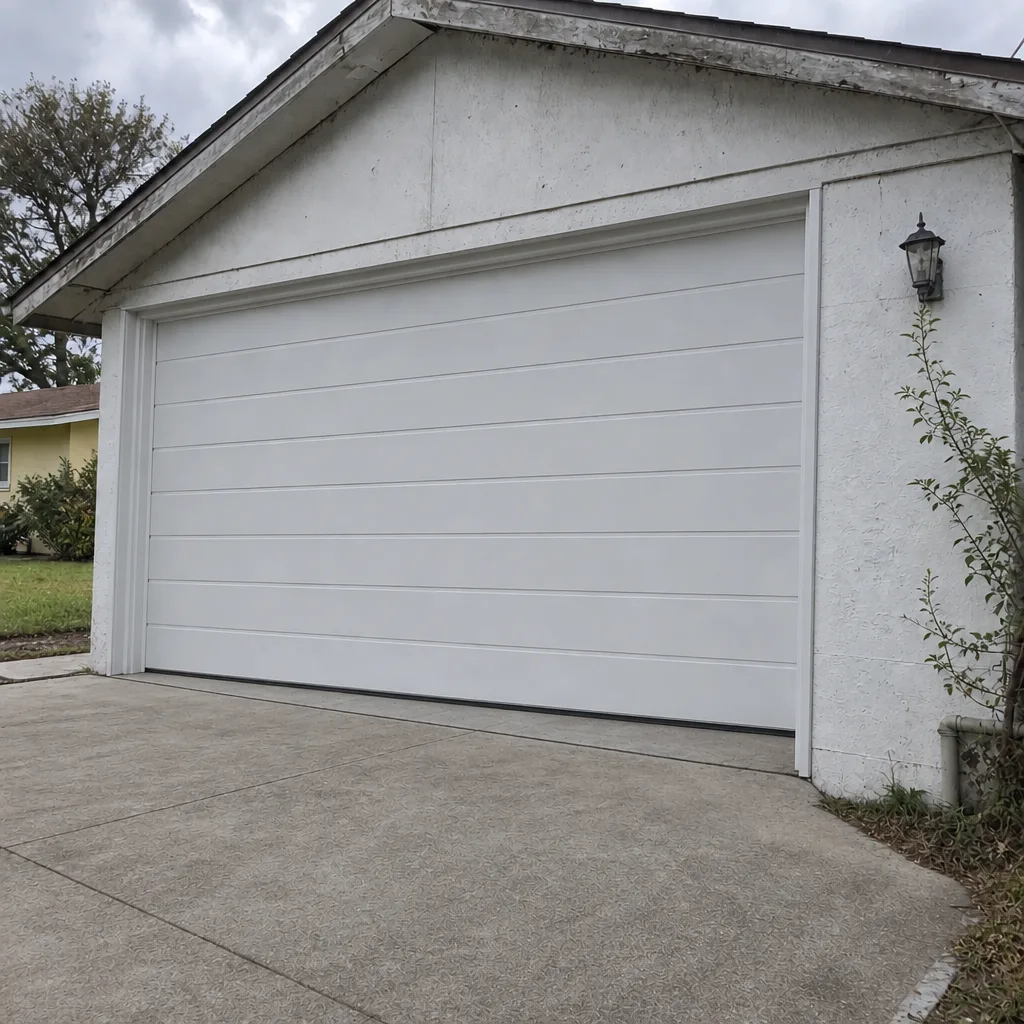
See the difference
 Before
 After
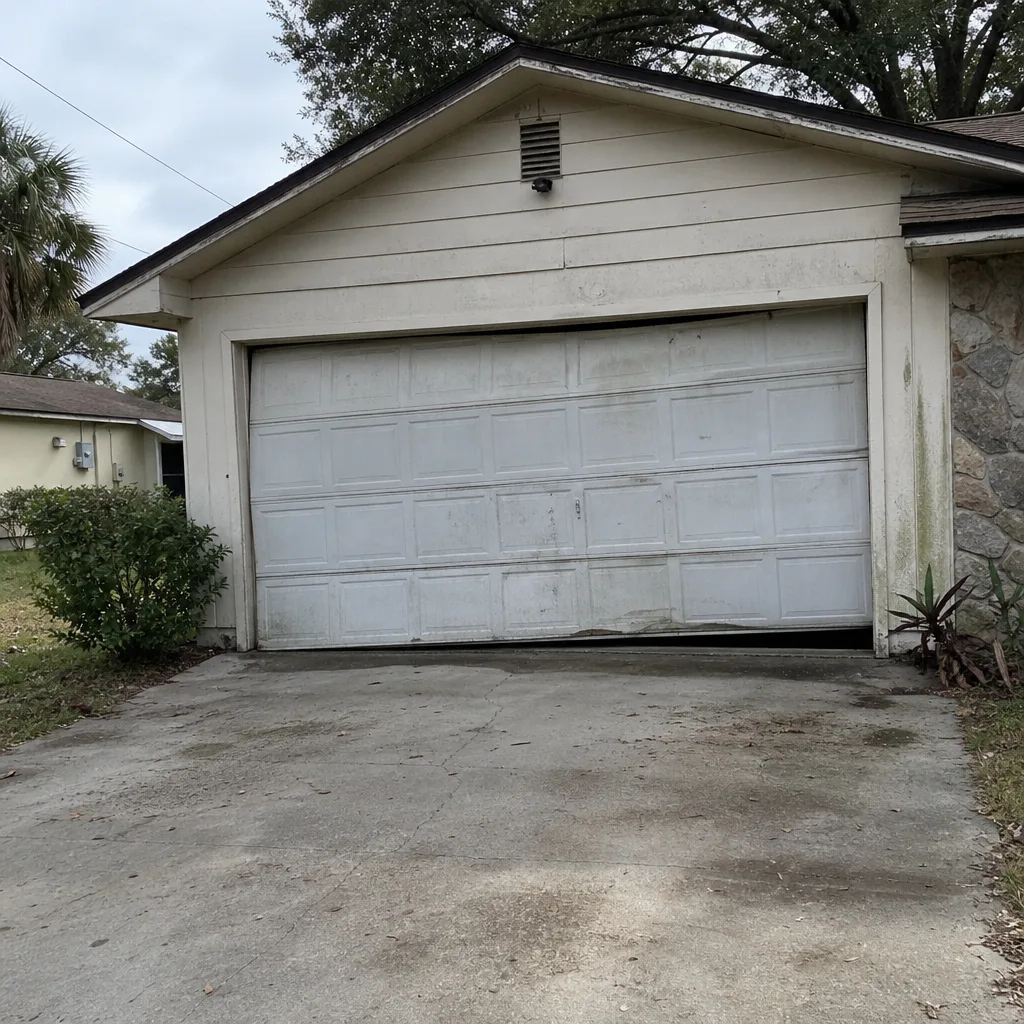 Before
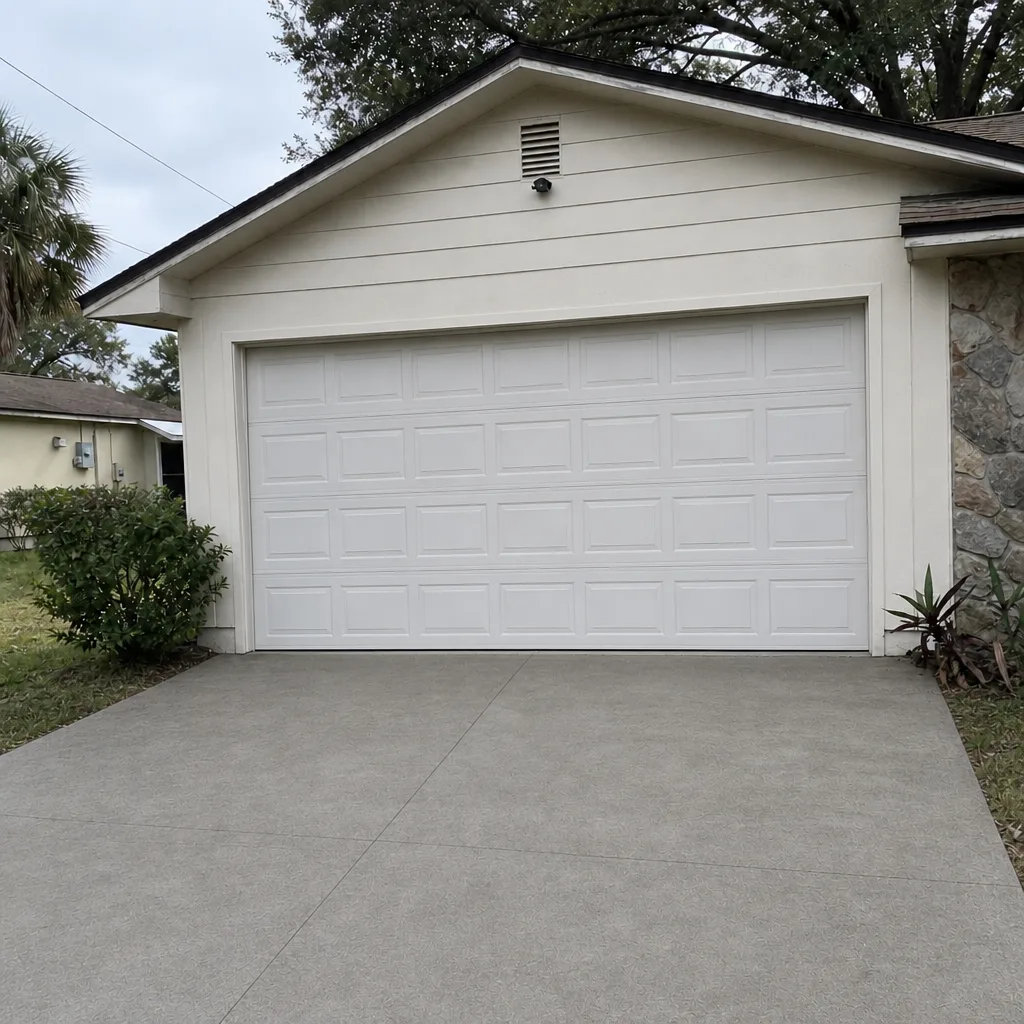 After
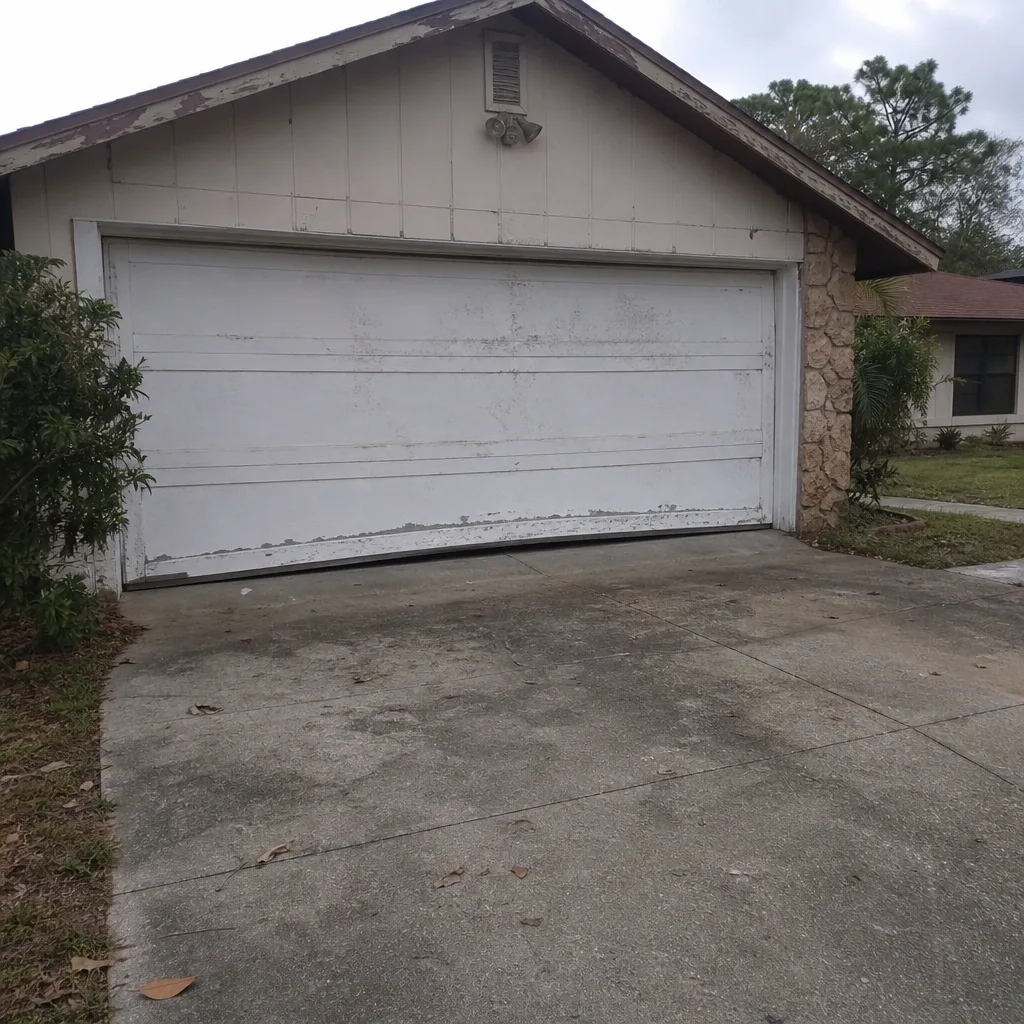 Before
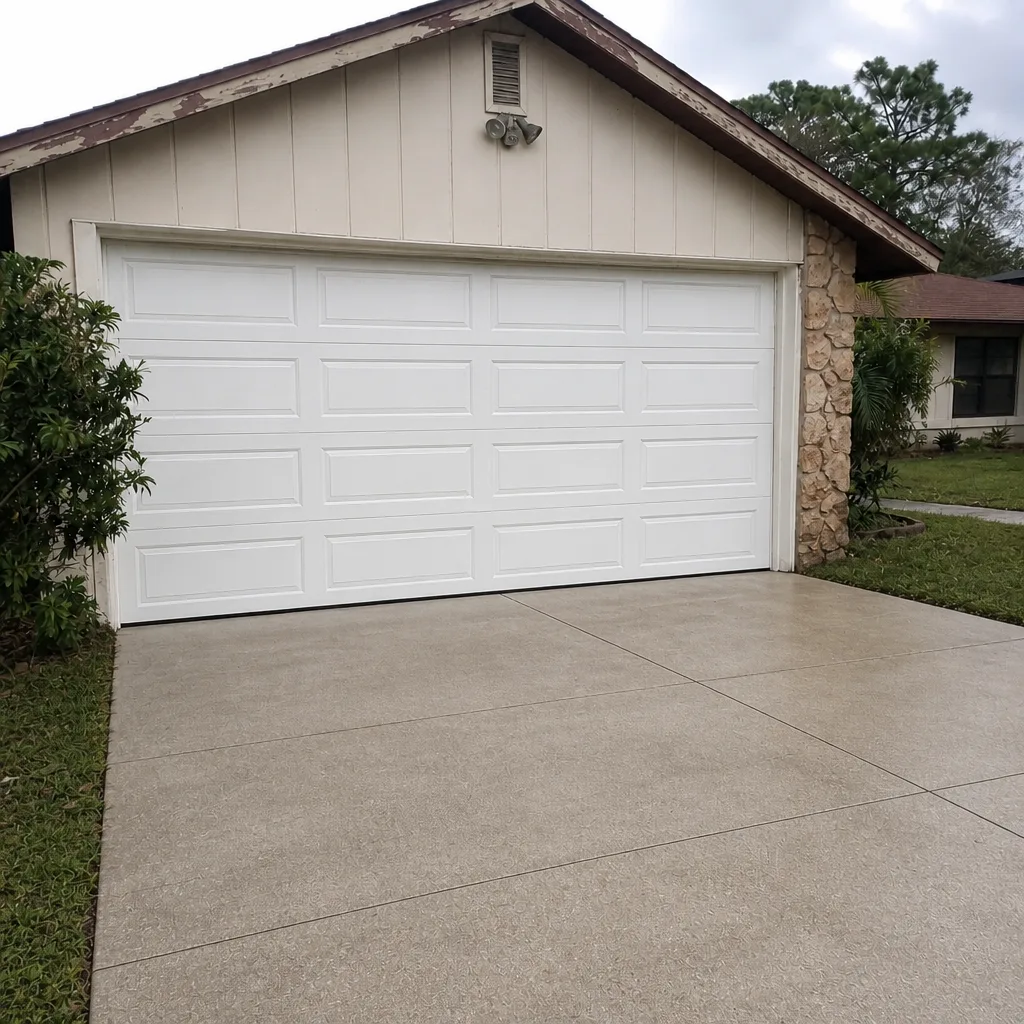 After
When to Call a Professional
Some garage door problems belong in the hands of a trained technician, full stop. Broken springs, snapped cables, doors off-track, and anything involving the torsion assembly should never be a DIY project. The stored energy in a wound torsion spring is significant, and a spring that releases unexpectedly can cause serious injury. That’s the safety side. The other side is the diagnosis itself: a door that reverses mid-travel or stops halfway up could be a sensor, a travel limit, a logic board, or a balance issue, and guessing at parts gets expensive fast.
Other situations where calling a professional makes sense: an opener that’s more than a decade old and failing intermittently, a door that’s visibly sagging at one corner, a panel that’s been dented by a car, and any door that’s difficult to lift by hand. And after a storm, when a limb or debris has hit the door or the track, have it inspected before you cycle it again.
Largo Garage Door Repair offers free estimates in Largo and works on repair, opener service, spring replacement and full installations across multiple brands. Our technicians have up to 15 years of experience, and the price is quoted and agreed before any work starts. Call (866) 515-4679 to schedule.
Frequently Asked Questions
You check a garage door contractor’s license in Largo through the Florida DBPR online license lookup, searching by company name or license number and confirming the status is Active. Check the expiration date and any disciplinary history while you’re in there. Ask for the license number on the first call, before you discuss price. Call (866) 515-4679 for a free estimate from a licensed local professional.
A State Certified contractor holds a license valid statewide, while a State Registered contractor is licensed for a specific local jurisdiction. Neither is automatically better for your job. What matters is that the license is active and covers the scope of work, which you confirm in the DBPR record. If the scope seems off for the license type, ask the contractor to clarify before you schedule.
Some do and some don’t, depending on the nature of the work, so the right move is to ask the City of Largo’s building department directly. A contractor who tells you “we don’t pull permits” as a selling point for a job that requires one is raising a license question. Ask what the permit requirement is for your specific job before work starts. Call (866) 515-4679 and we’ll walk you through what your job typically needs.
Garage door repair costs in Largo vary by the job, and the only reliable number is the one on your written estimate. Spring replacements, opener repairs and panel work all carry different parts and labor costs, and a matched pair of springs costs more than a single. The price is quoted and agreed before any work starts. Call (866) 515-4679 for an exact quote, and estimates are free.
For repair work on equipment you already own, a multi-brand specialist is usually the better fit because they can work on whatever brand is in your garage. For a new door installation where you’ve already chosen a manufacturer, an authorized dealer of that brand can make sense. If you’re unsure which brand you have, a specialist can tell you. Call (866) 515-4679 and describe your door and opener.
Ask for their Florida license number and the company’s physical address before discussing any work, then verify the license in the DBPR portal. A legitimate contractor will provide both without hesitation. Decline any offer that requires cash payment with no invoice or that pitches “no permit needed” for a job that likely requires one. When in doubt, call (866) 515-4679 and we’ll help you sort out what your door actually needs.
The Bottom Line
Hiring a garage door contractor in Largo comes down to three documents: a license number you’ve verified in the DBPR portal, current general liability and workers’ comp certificates, and a written scope of work with itemized line items. Get all three before anyone touches your door, and you’ve eliminated most of the risk in this trade. After a storm, the vetting matters more, not less. Multi-brand specialists make sense for repair; brand-exclusive dealers make sense for a new door you’ve already selected. The written estimate is the final price, and any legitimate contractor will tell you that before you ask.
Largo Garage Door Repair connects Largo homeowners with licensed, insured local professionals who work on LiftMaster, Chamberlain, Genie, Clopay, Amarr, Wayne Dalton, Craftsman and Raynor equipment. Whether it’s a spring that failed overnight, an opener that won’t respond, or a full door replacement, we’ll tell you exactly what’s wrong before we touch it, and the price is quoted and agreed before any work starts. Free estimates, upfront pricing, and one provider for the entire door system. Call (866) 515-4679 to get started.
Written by the team at Largo Garage Door Repair.