Last updated November 22, 2026
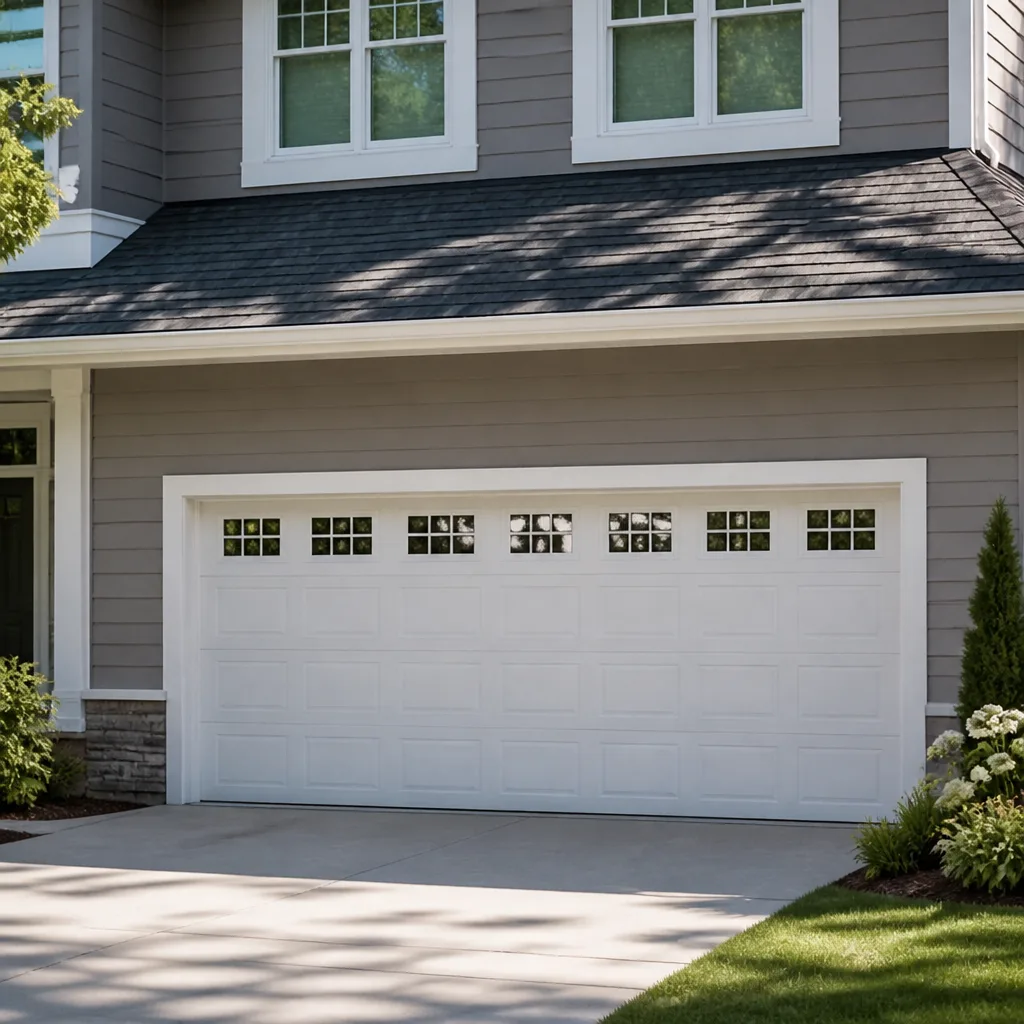
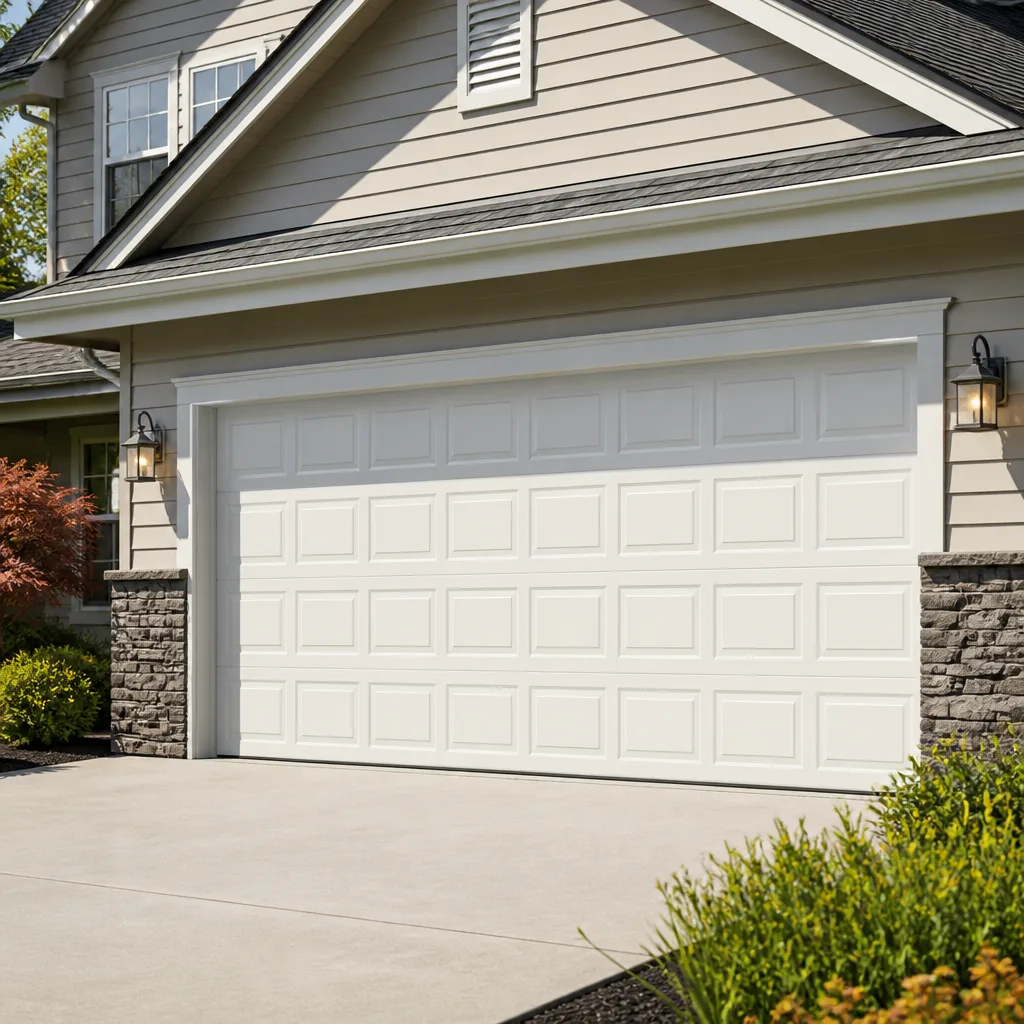 Raised-panel steel
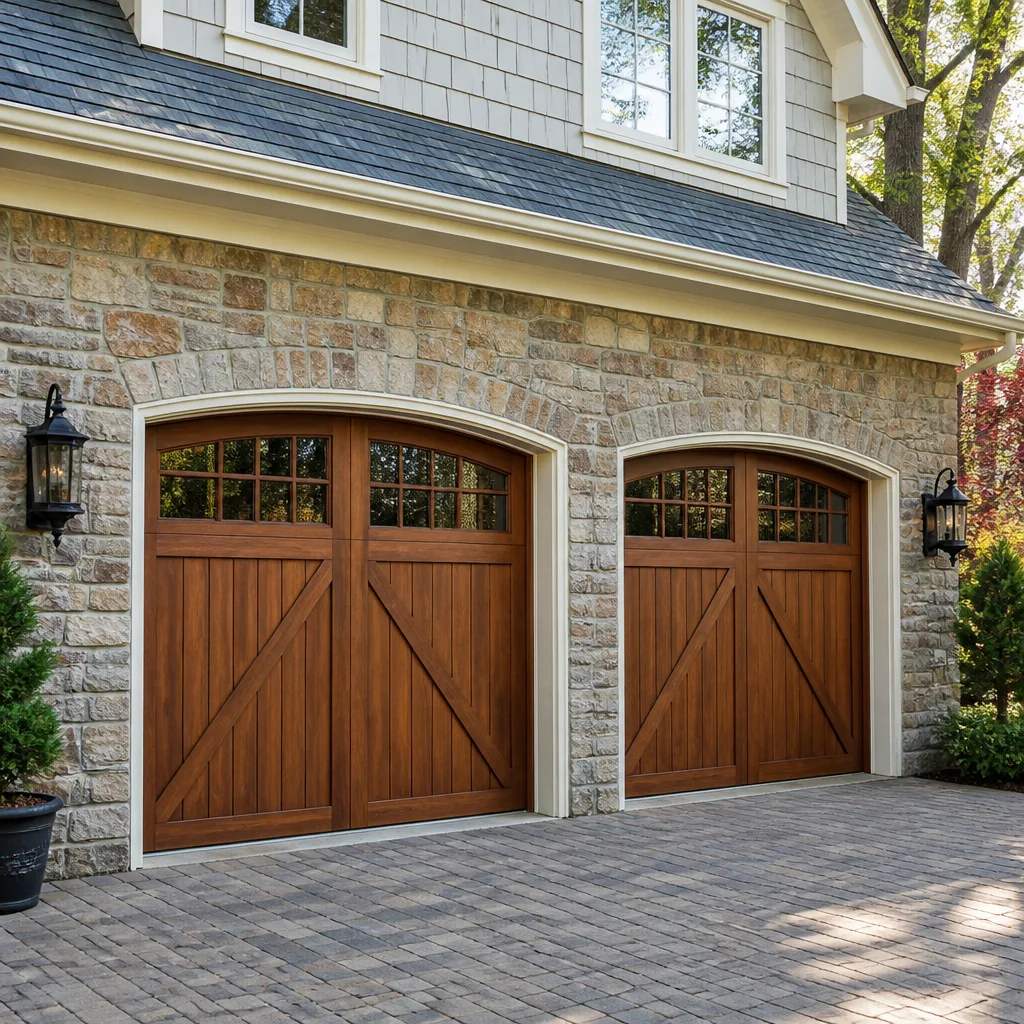 Carriage house
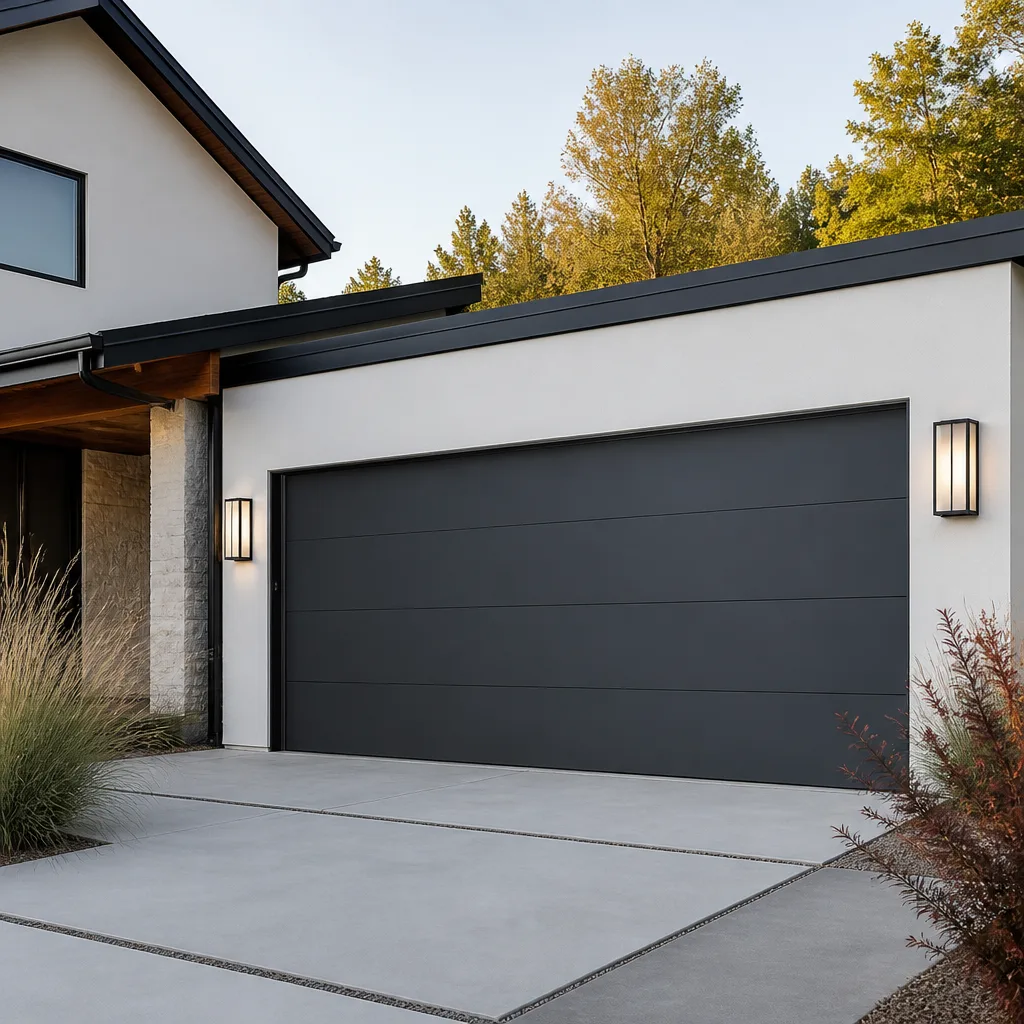 Modern flush
 Full-view glass
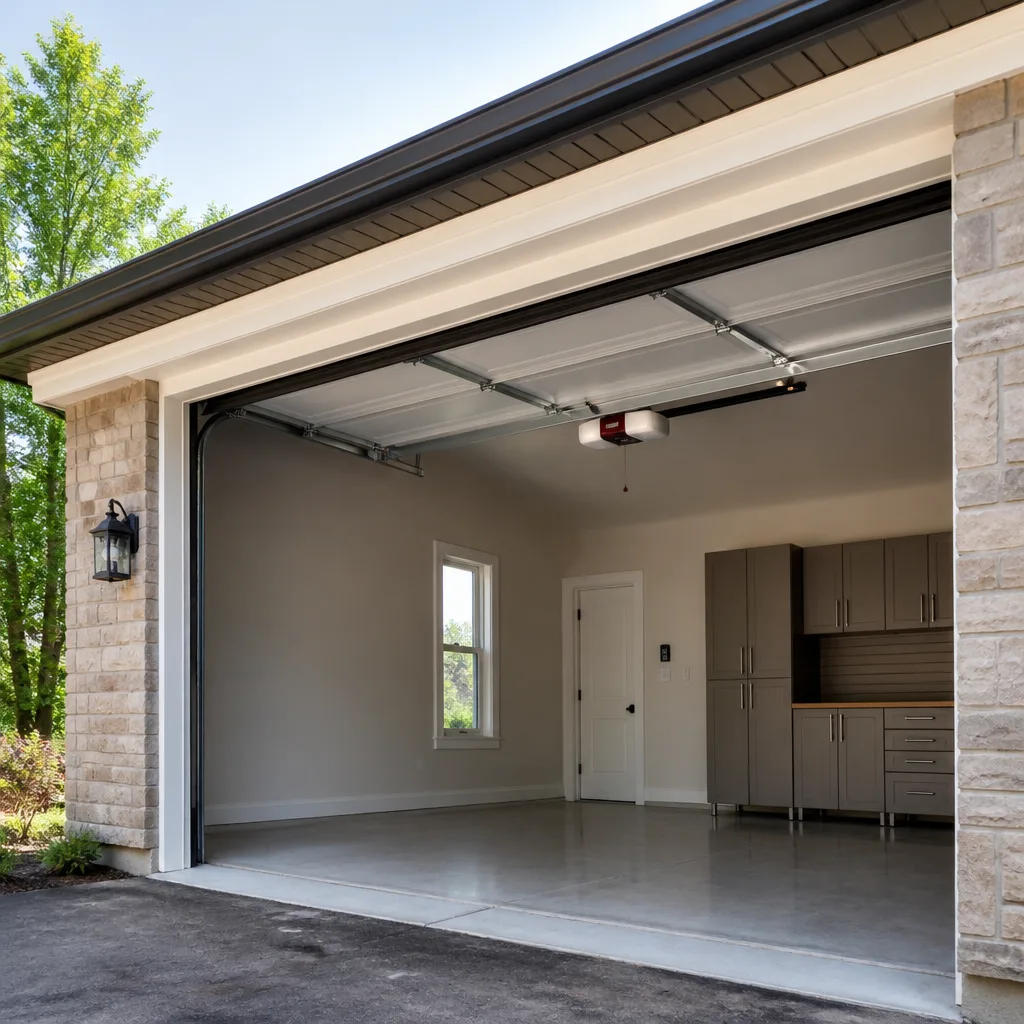 LiftMaster openers
 Chamberlain openers
Full 25-point door and opener safety check with every visit - springs, cables, rollers, tracks, and your LiftMaster or Chamberlain opener included
You get a price before we start. It does not change when the pro arrives.
Get your free estimateDIY vs Professional Garage Door: The Largo Homeowner’s Decision Guide
Replacing a garage door opener is a reasonable weekend project. Replacing a torsion spring is not, and the difference isn’t your confidence level, it’s physics. A wound torsion spring stores enough energy to throw a winding bar through drywall or break a wrist in under a second, and no YouTube video changes that. Most homeowners treat “DIY vs professional” as a question about skill, and that framing is why so many garages end up half-fixed and more expensive than when they started. What actually separates the two columns is consequence: some tasks are safe, reversible, and code-neutral, while others carry permit records, insurance exposure, and real physical danger. In this guide, we’ll walk through which garage door tasks are genuinely homeowner-appropriate in Largo, which ones require a licensed professional, how Florida’s building code handles the difference, and how a hybrid approach can save you money without putting you in the path of a loaded spring.
Quick Answer
In Largo, homeowner-appropriate garage door work includes opener programming, weather stripping, lubrication, and minor panel dents. Everything that touches the torsion spring, the cables, the track alignment on a new install, or the full replacement of a door that requires a permit belongs in the hands of a licensed professional. The dividing line isn’t how technical the task feels, it’s whether a mistake can injure you, void a permit, or create a liability problem during a sale or insurance claim.
Styles & brands we work with
- Raised-panel steel
- Carriage house
- Modern flush
- Full-view glass
- LiftMaster openers
- Chamberlain openers
Table of Contents
- The Real Dividing Line: Physics, Not Confidence
- What’s Actually DIY in Largo: The Homeowner Task List
- What Requires a Licensed Professional
- Florida Building Code and Your Permit Record
- The Real Cost of DIY Gone Wrong
- Tools and Skills: An Honest Self-Assessment
- The Hybrid Approach: Pro Diagnosis, Owner Maintenance
- Why Largo’s Climate Changes the Maintenance Calendar
The Real Dividing Line: Physics, Not Confidence
Garage doors are the largest moving object in most homes, and their weight is managed by one of two spring systems. Torsion springs sit on a horizontal shaft above the door and store energy by being wound, typically several full turns. Extension springs run along the horizontal tracks and store energy by being stretched. Both are under constant, heavy tension every moment of the day. When a torsion spring fails, that stored energy releases immediately, and the metal and tools attached to it move with it.
That physics is why the DIY question isn’t about whether you’re handy. It’s about whether the task, if it goes wrong, sends you to the emergency room. The two springs, the lift cables, and the bottom bracket that anchors those cables all sit on the wrong side of that line. So does anything involving a fully loaded door with the springs still under tension. Door panels, opener remotes, weather seals, and the light bulb in the opener motor head all sit on the right side.
At Largo Garage Door Repair, we’ve been asked more than once to finish a job a homeowner started and then thought better of. That’s not a failure, it’s exactly the right call. Knowing where the line is before you pick up a wrench is what separates a confident homeowner from an injured one.
- Safe to attempt: opener programming, remote battery swaps, weather stripping, lubrication, minor cosmetic panel repairs.
- Not safe to attempt: torsion spring replacement, extension spring replacement, cable replacement, bottom bracket work, track realignment on a loaded door.
- Requires a professional and a permit: full door replacement, major structural track changes, opener replacement where wiring is altered.
What’s Actually DIY in Largo: The Homeowner Task List
Plenty of garage door upkeep is well within reach for a careful homeowner with basic tools. These tasks are low-risk, reversible, and don’t touch anything storing energy. Here’s the list we hand to Largo homeowners who want to stay hands-on with their door without getting into unsafe territory.
- Opener programming and remote pairing. Whether you have a LiftMaster, Chamberlain, or Genie, adding a new remote or re-pairing a keypad is a menu-level task with no physical risk. Consult the manual that came with the unit or download it from the manufacturer.
- Battery replacement. Remotes, keypads, wall consoles, and safety sensors all use standard batteries. Swap them before you assume the opener is failing.
- Weather stripping and bottom seal replacement. These slide into a track or lift out of a retainer, and they wear out in Florida’s heat and humidity. A fresh seal keeps rain, insects, and dirt out, and it’s a twenty-minute job.
- Lubrication. A garage-rated lubricant on the rollers, hinges, and the opener’s rail (never on the springs themselves) quiets a noisy door and slows wear.
- Minor panel dents. A small dent in a steel panel can often be worked out or filled and touched up. Cosmetic repair doesn’t affect the door’s balance or safety systems.
- Visual inspection. Look for fraying on the cables, gaps in the spring coils, loose hinges, and a door that looks crooked when closed. This is the most valuable DIY task because it tells you when to call.
- Safety sensor cleaning and alignment. The two eyes near the floor can be wiped clean and nudged back into alignment. If the door won’t close, this is the first place to check.
Weather stripping and lubrication matter more in Largo than they would in a drier climate. The humidity that hangs around most of the year accelerates wear on rubber seals and makes lubricant more important, not less. If you notice your door getting louder or rougher over a few months, that’s the signal to lubricate and inspect rather than wait.
What Requires a Licensed Professional
The short version: any task that involves stored energy, structural weight, or permitted work needs a trained professional. That’s not a sales pitch, it’s the reason our spring repair is a dedicated service rather than a side job. A torsion spring holds enough tension to be genuinely dangerous the moment you touch it, and one missing turn or a winding bar that slips is all it takes.
Here’s what belongs in the professional column:
- Torsion spring replacement. The most dangerous and most commonly mishandled repair on a garage door. A failed spring often leaves the door nearly impossible to lift, and adjusting or replacing it requires specific winding tools and technique.
- Extension spring replacement. Stretched springs store energy too, and the safety containment cables some older doors lack are critical. Never reach for a spring that has no containment cable.
- Cable replacement. The lift cables run at high tension and can whip when they fail. Frayed cables are a stop-and-call-it-in signal.
- Track realignment. A track that’s slightly out of square will force the opener to work harder, and adjusting a loaded track is not a one-person job.
- Bottom bracket work. The bottom bracket is where the cable attaches with serious tension. It is not a DIY point of entry.
- Full door replacement. A new door is a weight and spring system replacement, and it usually triggers a permit.
- Opener replacement where wiring changes. Swapping an opener is closer to DIY-friendly when it plugs into an existing outlet, but hardwired or panel work is not.
If you’re unsure which side of the line you’re on, that’s your answer. A free diagnosis costs nothing compared to a hospital visit or a door that falls on a car. To see how we handle the pieces that shouldn’t be touched, take a look at our garage door spring repair page.
Florida Building Code and Your Permit Record
Here’s where a garage door decision stops being about skill and starts being about paperwork. In Florida, structural changes to a home, including a full garage door replacement in many cases, fall under the state building code and require a permit from your local building department. The exact rules vary by jurisdiction, and Largo homeowners should confirm requirements with the city’s building department before starting any replacement work. But the general principle is consistent: permitted work is inspected work, and inspected work has a paper trail.
That trail matters later. When you sell a home, an inspector or buyer’s agent may pull permit history. A garage door replacement done without a permit can surface as an unpermitted improvement, which can stall a sale, complicate an insurance claim after storm damage, or require you to open walls and paperwork after the fact. It’s not the door that becomes the problem, it’s the record of the door.
There are also code implications for how the door is anchored and how the opener’s safety features are set up. A door that was installed by a contractor who pulled a permit will have that work on file. A door that was swapped in by a homeowner to save a few hundred dollars may not.
- Full door replacement: typically permitted. Ask the city’s building department.
- Spring, cable, or opener repair: usually repair, not replacement, and typically not permitted, but confirm locally.
- Cosmetic work: not permitted, and not a code issue, which is why it stays in the DIY column.
If a door or opener installation is on your list, our garage door opener repair and installation services walk through how we handle the permit side from start to finish.
The Real Cost of DIY Gone Wrong
The worst-case DIY garage door stories tend to be dramatic and rare. The more common reality is quieter and more expensive than it looks. A homeowner rehooks a track a little off square, the door closes and opens, and everything seems fine. Three months later the opener’s motor is grinding, the gears have worn unevenly, and what looked like a successful DIY repair turns into an opener replacement on top of the original repair.
That pattern shows up in a few predictable ways around Largo:
- Slightly misaligned track. Doesn’t fail immediately. Forces the opener to fight the door on every cycle, and the opener loses that fight over months, not minutes. What would have been a track adjustment becomes a track adjustment plus a new opener.
- Wrong spring for the door. Springs are sized by door weight and cycle life. A mismatched spring can make the door feel fine at first and then fail early, sometimes in the same season.
- Over-torqued or under-torqued hardware. Loose hinge bolts rattle and wear the door panel. Stuck bolts strip and require drilling. Both take a five-minute job and turn it into a panel replacement.
- Cosmetic work done wrong. Paint over rust without prep and it comes back within one humid season. Fill a dent without matching the finish and it’s visible from the street.
- The one that costs the most. A door that half-works for months trains everyone in the house to live with it. That means a failing door is left failing, the safety sensors get ignored, and the eventual repair is larger and more urgent than the original problem ever was.
None of this is a worst-case horror story. It’s the ordinary cost of getting a task slightly wrong and finding out three months later. The reason to call a professional isn’t that the door will explode. It’s that small mistakes in a garage door system tend to compound.
Tools and Skills: An Honest Self-Assessment
Before you decide a task is DIY-appropriate, be honest about what you have on hand and what you know how to do. A quick self-check saves a lot of frustration.
- Do you have the right tools? A socket set, a level, a tape measure, and a ladder cover the safe list. If a task calls for winding bars, a C-clamp for the door, or a torque wrench you don’t own, it’s not in your column.
- Can you lift the door by hand? With the opener disconnected, a properly balanced door should lift easily to about waist height and stay there. If it feels heavy, the springs are doing their job wrong, and that’s a diagnostic signal, not a repair task.
- Do you have a second set of hands? Anything involving a ladder, a panel, or a door in motion is safer with someone footing the ladder and spotting.
- Are you comfortable reading a manual? Opener programming goes quickly when you follow the steps for your specific LiftMaster, Chamberlain, or Genie model. It goes badly when you guess.
- Do you have a way to safely power off? Any electrical task, even a simple opener swap, starts at the breaker. If you’re not comfortable there, stop.
- Can you stop if it gets harder than expected? This is the big one. The most dangerous point in any DIY garage door job is the moment a homeowner decides to push through after the task gets away from them.
If you can answer yes to the safe-list questions and no to the professional-list tasks, you’re in good shape. If a task has you reaching for the phone halfway through the checklist, that’s the honest signal to make the call before you start.
The Hybrid Approach: Pro Diagnosis, Owner Maintenance
There’s a middle path that saves money without taking on the risky work. Use a professional for the diagnosis and the parts of the job that need real skill, then keep the ongoing maintenance in your own hands. This is how a lot of Largo homeowners manage their doors, and it works.
Here’s how a hybrid approach looks step by step:
- Call for a diagnosis when something changes. A new noise, a door that doesn’t close flush, a remote that stops working, a gap above the door. Get the problem identified before you decide what you’ll fix.
- Have the professional handle the safety-critical work. Springs, cables, tracks, and anything under tension.
- Learn the maintenance routine during the visit. A good technician will point out what needs lubricant, which seal is closest to failing, and what to watch over the next six months.
- Do the maintenance yourself between visits. Lubrication, weather stripping, sensor cleaning, and remote batteries are all in your column.
- Book a checkup if the door feels different. Early is cheaper than urgent.
We work on your brand and your model, whether it’s a Clopay panel design, a LiftMaster opener, or an older opener with a dead remote. From opener to panel to full replacement, a single diagnosis tells you what’s a repair and what’s a maintenance item. If you want a professional to look at your system, our garage door repair page covers what a visit includes.
Why Largo’s Climate Changes the Maintenance Calendar
Garage doors in Largo live with heat and humidity most of the year, and that shifts what needs attention and when. Rubber weather seals dry out and crack faster than they would in a drier climate, which means the seal around the door perimeter is a maintenance item every couple of seasons rather than every few years. Lubricant dries and thickens in the heat, so a door that ran quietly in spring can start groaning by late summer if you skip it.
Humidity also affects the metal and paint on steel doors. Rust starts in the field of the panel and along the bottom edge where moisture collects, and once it starts, cosmetic repair gets harder to keep up with. A quick inspection after the rainy season is a good habit, and touching up chips and scratches before they spread is one of the highest-return DIY tasks on the whole door.
Hurricane season is where Largo homeowners most often wish they’d stayed on top of things. Storm prep for a garage door isn’t just about the door itself, it’s about the whole system being sound: springs that hold, cables that aren’t frayed, an opener with working sensors, a track that isn’t fighting the door. A pre-season inspection catches those problems while there’s time to schedule the work. When a door is already failing and you need help quickly, emergency garage door service exists for exactly that reason. We can also walk you through the full range of what we handle at Largo Garage Door Repair.
Common Mistakes to Avoid
- Assuming confidence equals competence. Liking the look of a job is not the same as having the training to do it safely. If a task involves a spring or cable, confidence won’t save you when the physics goes sideways.
- Winding a torsion spring without the right tools. This mistake alone is the reason spring repair is a dedicated profession. A screwdriver or a pair of pliers is not a winding bar, and a partial turn is enough to seriously injure someone.
- Skipping the permit for a full replacement. It seems like a minor saving until a buyer’s inspection or an insurance claim turns the unpermitted work into a real problem. In Largo, confirm requirements with the city’s building department before any replacement work.
- Living with a door that half-works. The longer a door runs crooked or loud, the more the opener and springs wear down. A small repair now is a cheaper visit than the one you’ll need in a few months.
- Treating cosmetic fixes as one-and-done. Painting over rust without prep, or filling a dent without matching the finish, makes the fix visible from the street. Do the prep or don’t do the fix.
- Ignoring a new noise. Garage doors don’t usually fail quietly, they fail louder. A door that just started groaning is telling you something, and the cost to listen is close to zero.
- Going without a diagnostic before deciding the repair. DIYing a fix for the wrong problem is the most expensive version of DIY. Get the diagnosis, then decide what you’ll do yourself.
See the difference
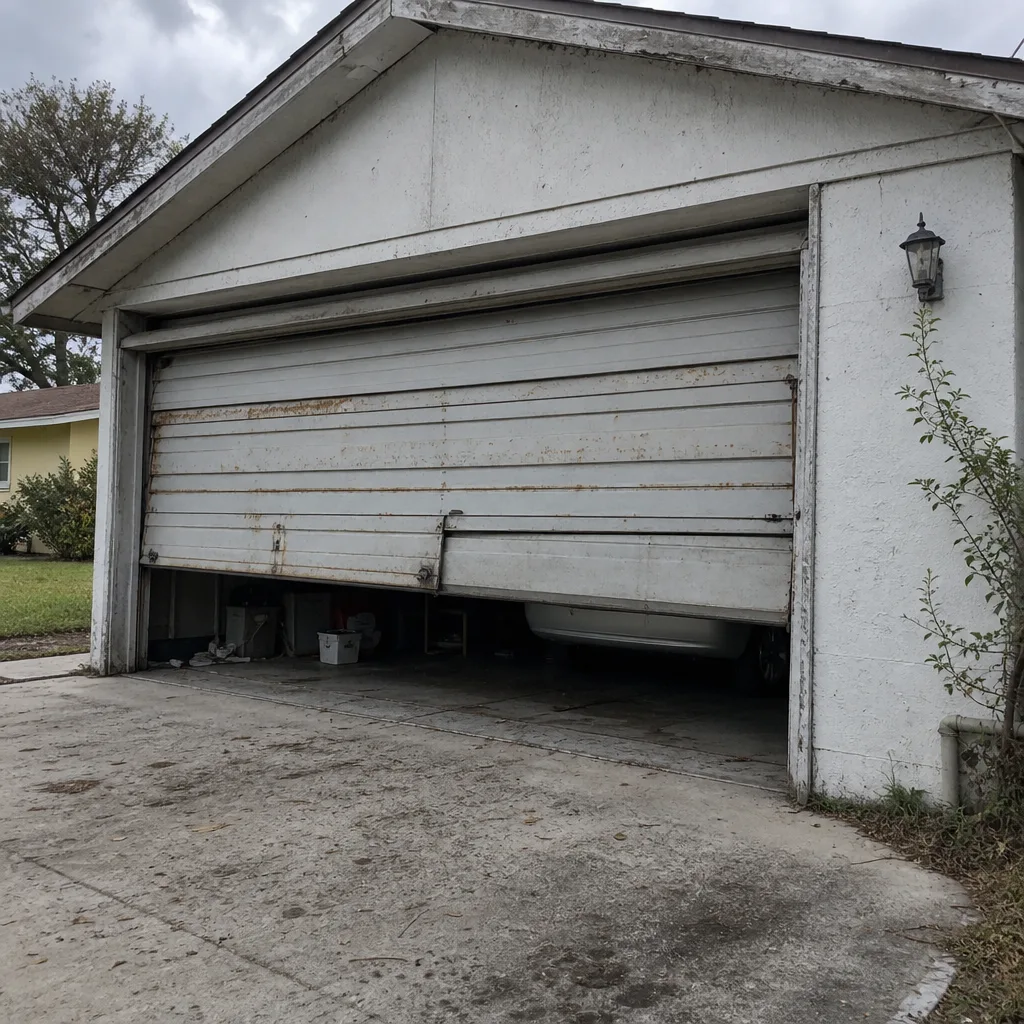 Before
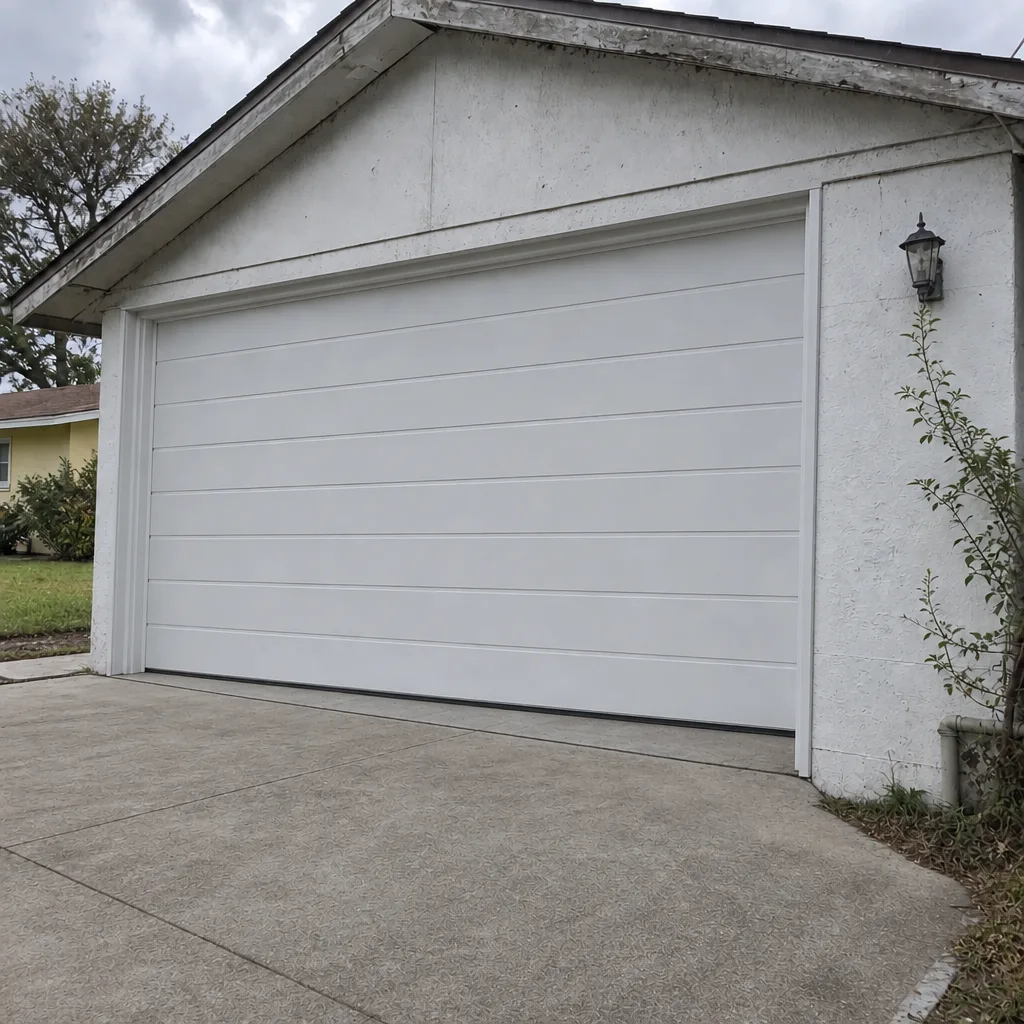 After
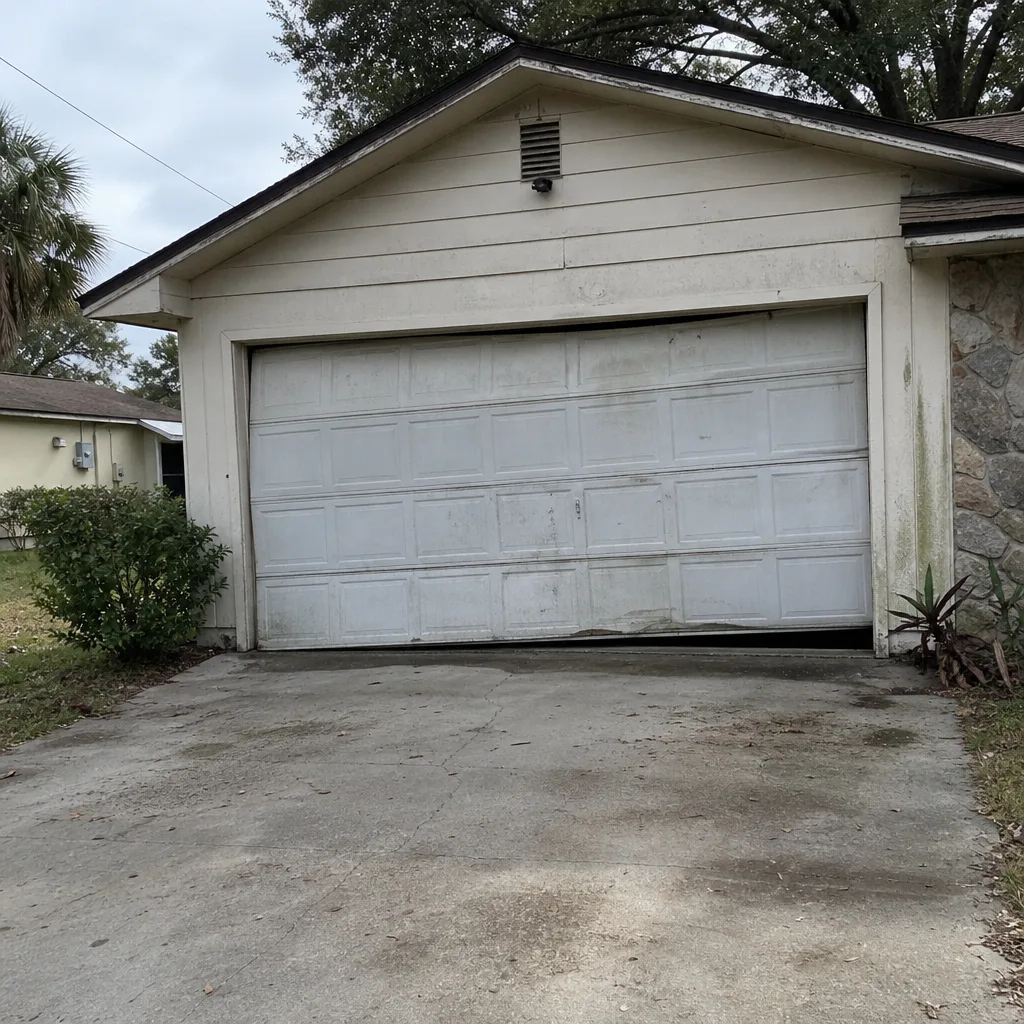 Before
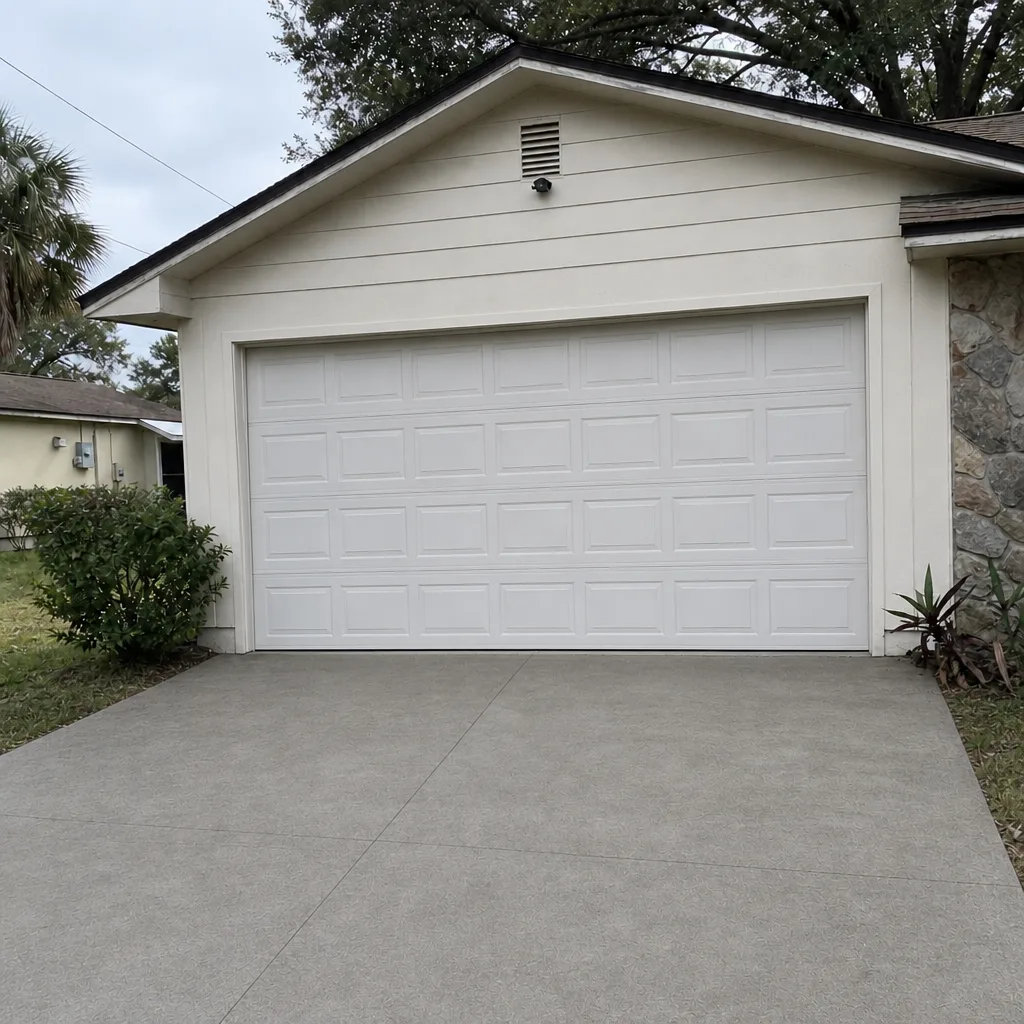 After
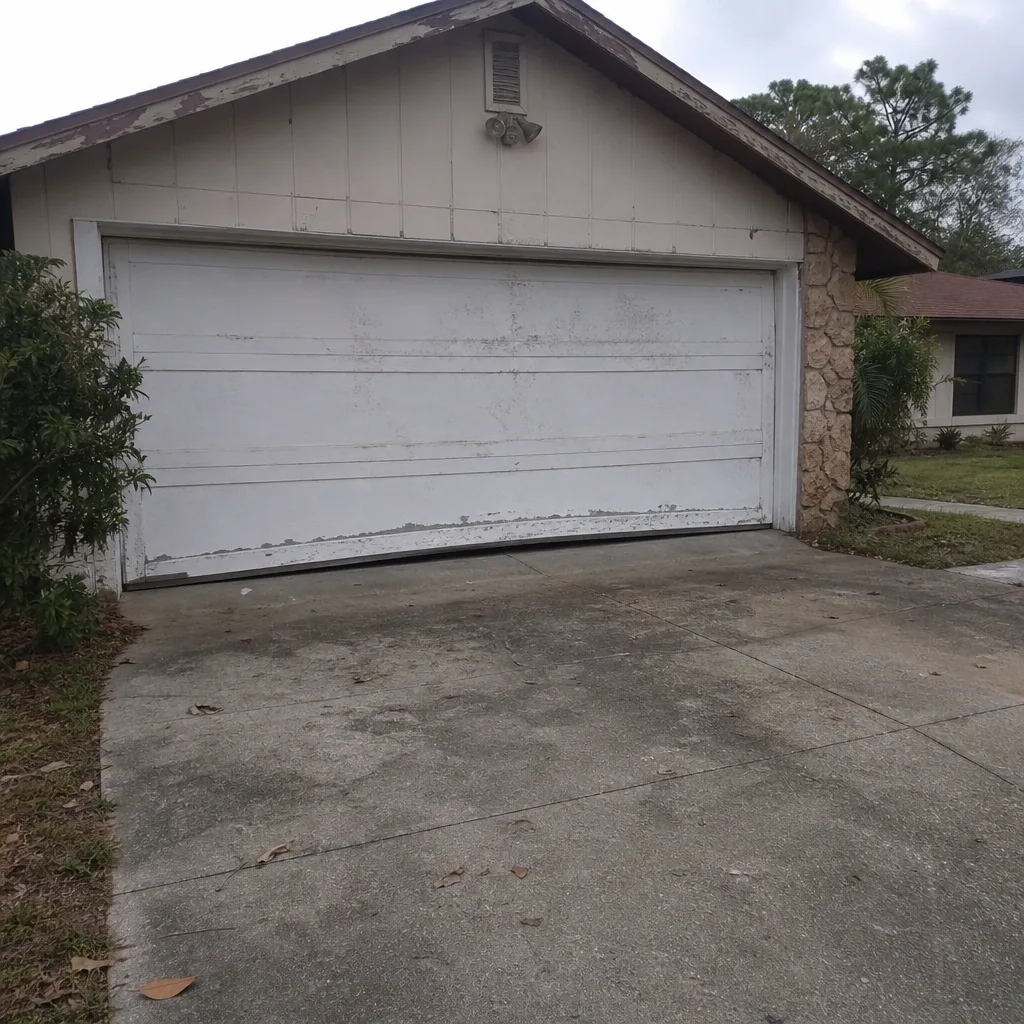 Before
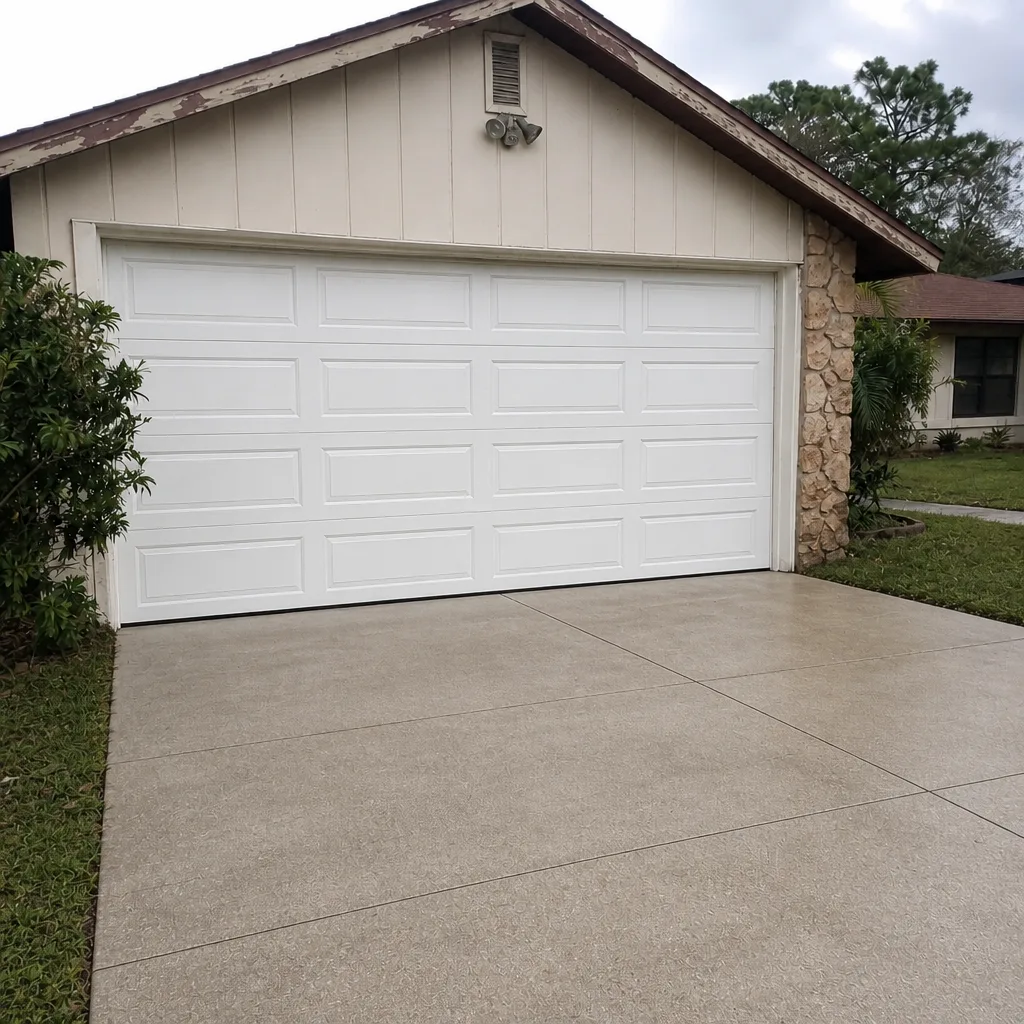 After
When to Call a Professional
Call a professional if the door won’t lift, if the spring has broken, if a cable looks frayed or has snapped, if the door is crooked or off the track, or if the opener has stopped responding after a battery swap and a sensor check. Call if a repair you attempted didn’t fix the problem, and call if you’re simply not sure whether it’s safe. Those aren’t failure scenarios, they’re the exact tasks we handle every day, and every one of them costs less to fix than to live with.
Largo Garage Door Repair offers free estimates in Largo. When you call, we diagnose first and quote before any work starts, so you’ll know exactly what the job involves before anyone touches your door. Reach us at (866) 515-4679.
Frequently Asked Questions
No. A torsion or extension spring is under heavy tension, and releasing that tension incorrectly can cause serious injury in under a second. Spring replacement needs specific winding tools, technique, and experience, which is why it stays on the professional side of the line even for very capable homeowners. Call (866) 515-4679 for a same-day diagnosis if your spring has failed.
Full door replacement typically requires a permit under Florida’s building code, though the exact requirements are set by the local building department. Largo homeowners should confirm with the city’s building department before starting a replacement, and the permit record should be kept with your home documents. For repair work like springs or openers, a permit is usually not required, but confirm locally. Call (866) 515-4679 if you’d like a free estimate on a permitted installation.
Sometimes. If you’re replacing an opener with the same model and the wiring and mounting points are already in place, a swap is closer to a weekend project. If you’re changing the opener model, moving the mounting position, or touching any wiring beyond a plug-in connection, hire a professional. Openers from LiftMaster, Chamberlain, and Genie all vary in their mounting requirements. Call (866) 515-4679 for a free estimate if you’re not certain.
Professional repair is usually cheaper than DIY gone wrong. The cost of a professional repair is a written, quoted price agreed before work starts, while the cost of a DIY misstep often includes a second repair, a replacement part, or an opener that fails months later. The written quote is the price, and estimates are free. Call (866) 515-4679 for an exact quote.
Opener programming, remote and keypad battery swaps, weather stripping, lubrication, minor panel dents, visual inspections, and safety sensor cleaning are all within reach for a careful homeowner. None of them touch the springs, cables, or anything under tension, and none of them affect the door’s balance. If a task involves a spring, cable, or track adjustment on a loaded door, call (866) 515-4679.
Yes, and that’s often the best arrangement. A professional diagnosis tells you exactly what’s wrong and what’s coming up, and you can handle the simple maintenance like lubrication and seals on your own between visits. That keeps costs down without tempting anyone to touch the springs. Call (866) 515-4679 for a free estimate and diagnosis.
The Bottom Line
DIY vs professional for a garage door isn’t a question about how handy you are. It’s a question about which tasks are safe, reversible, and code-neutral, and which ones carry real physical and legal consequences. In Largo, opener programming, seals, lubrication, and minor cosmetics are yours for the taking. Springs, cables, track work, and full replacements belong to a licensed professional, and the Florida permit record on your home is a real reason to keep it that way.
The hybrid approach is the sweet spot: use a professional for the diagnosis and the risky repair, and handle the maintenance yourself between visits. If a spring has failed, a door is off-track, or the opener has gone dead, that’s a call, not a project. Largo Garage Door Repair can be reached at (866) 515-4679, and estimates are free. When you call, we’ll tell you exactly what’s wrong before we touch it, quote it, and you decide.
Written by the team at Largo Garage Door Repair.