Last updated November 22, 2026
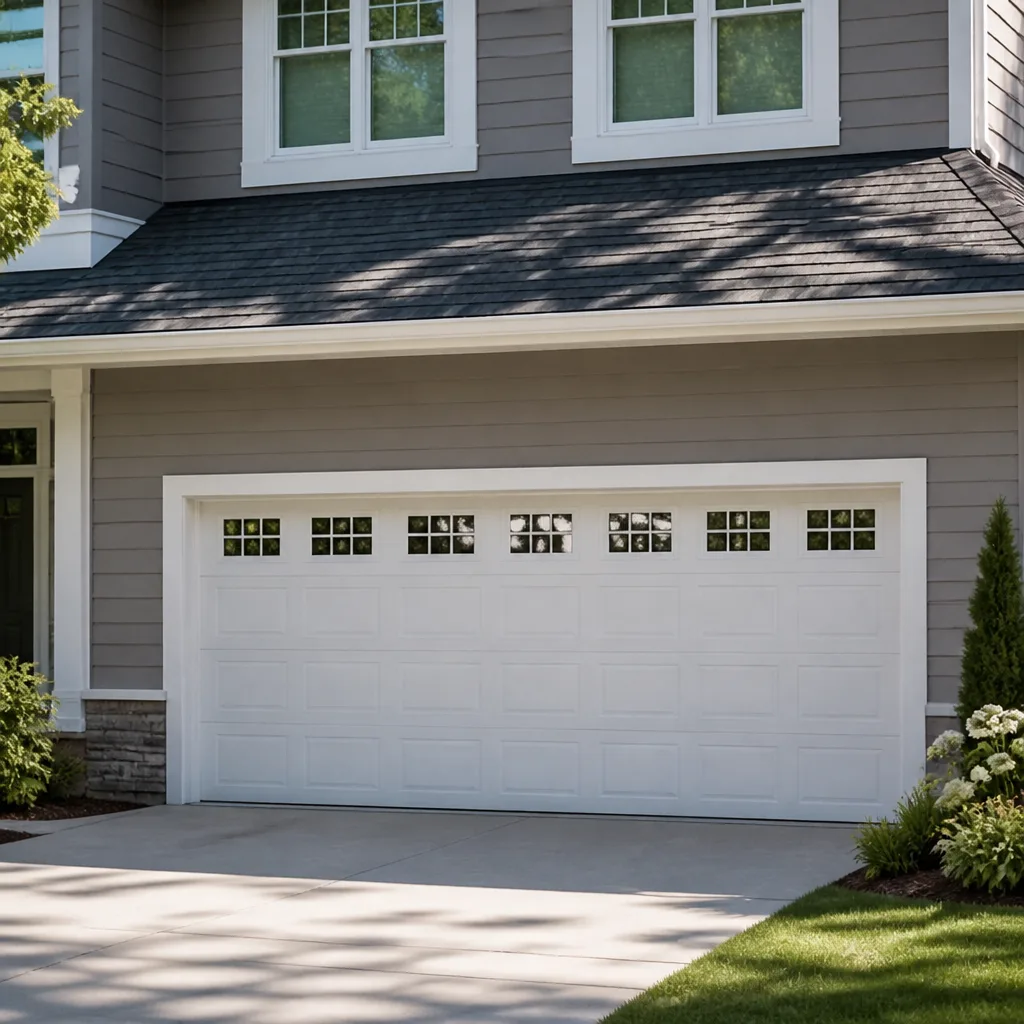
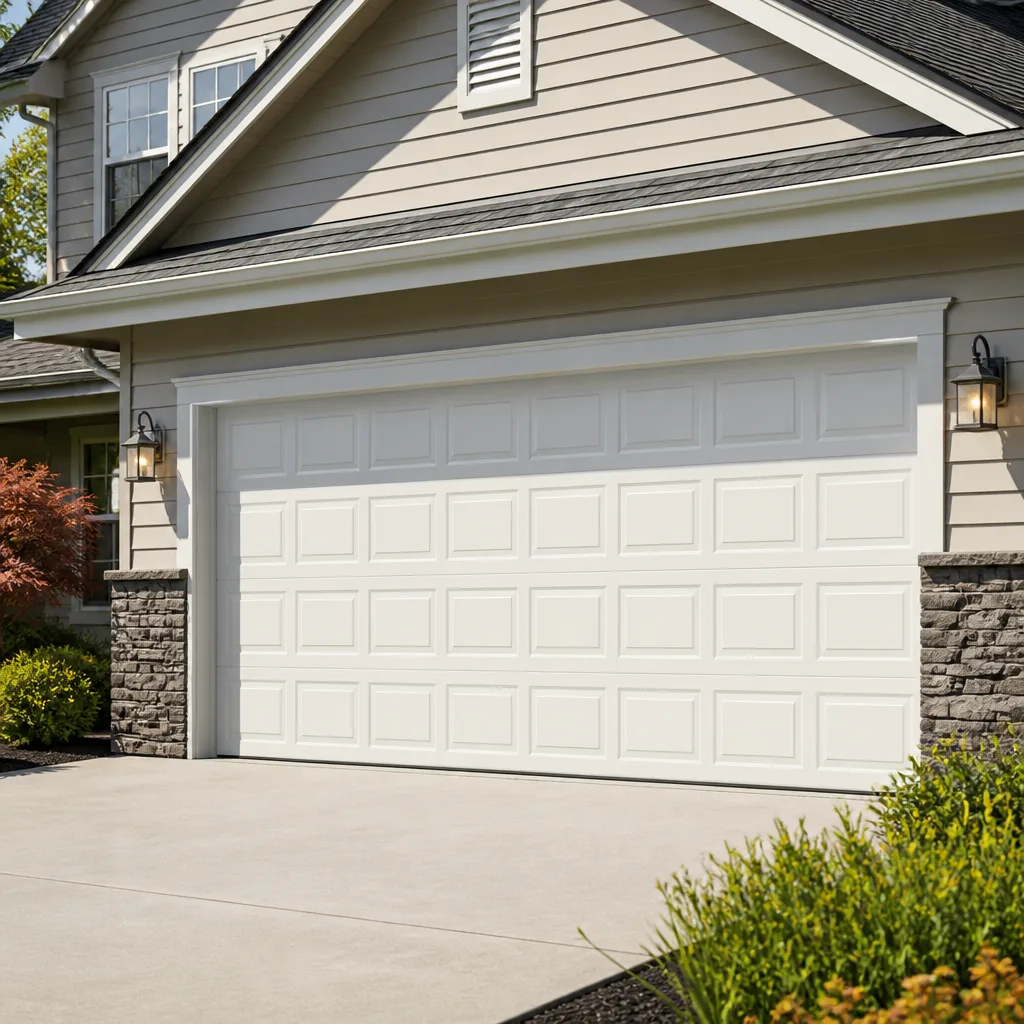 Raised-panel steel
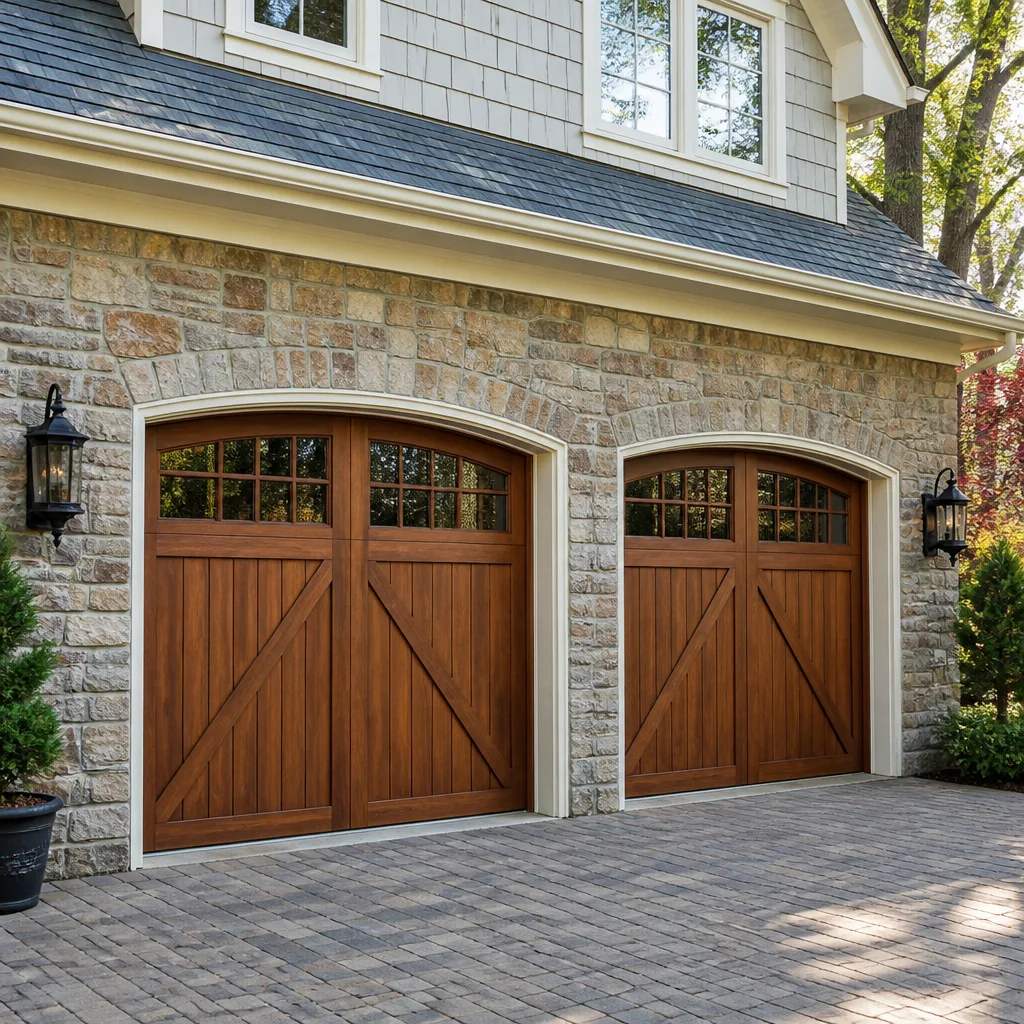 Carriage house
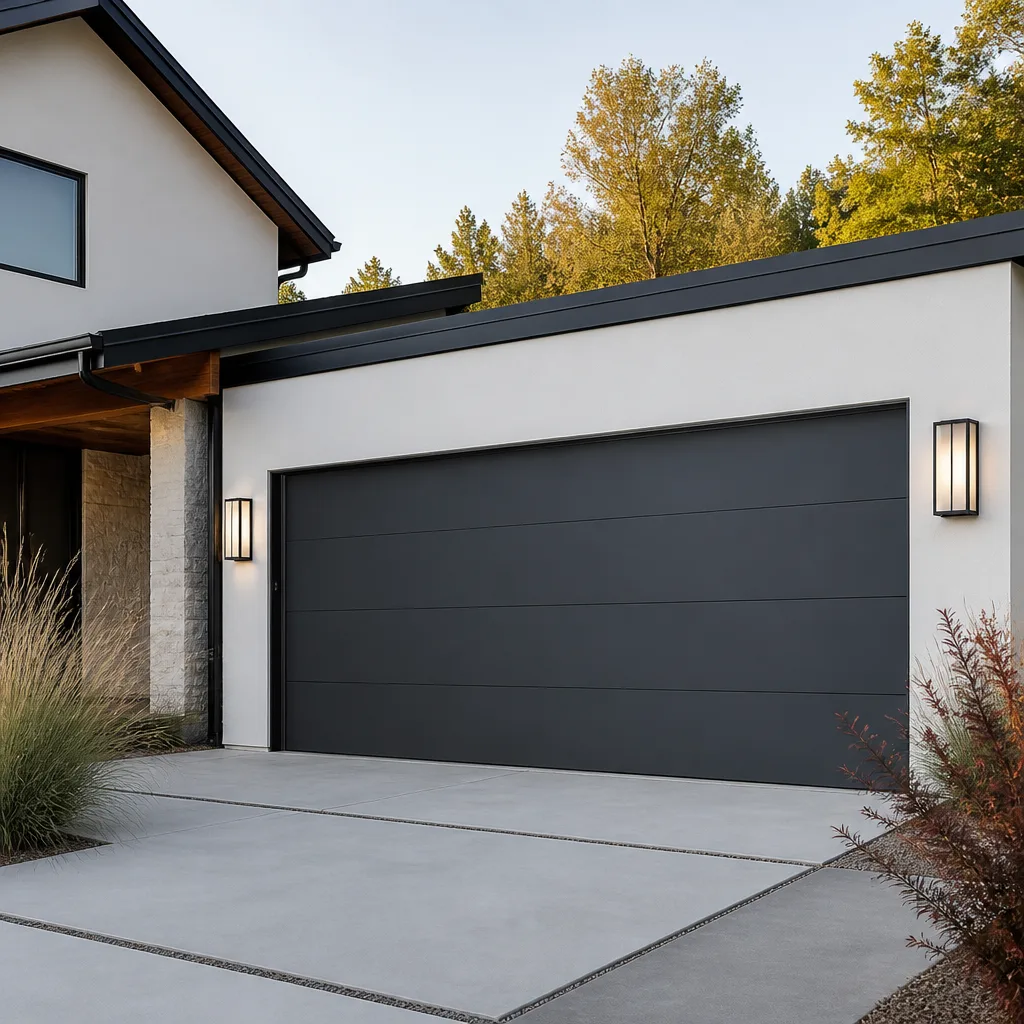 Modern flush
 Full-view glass
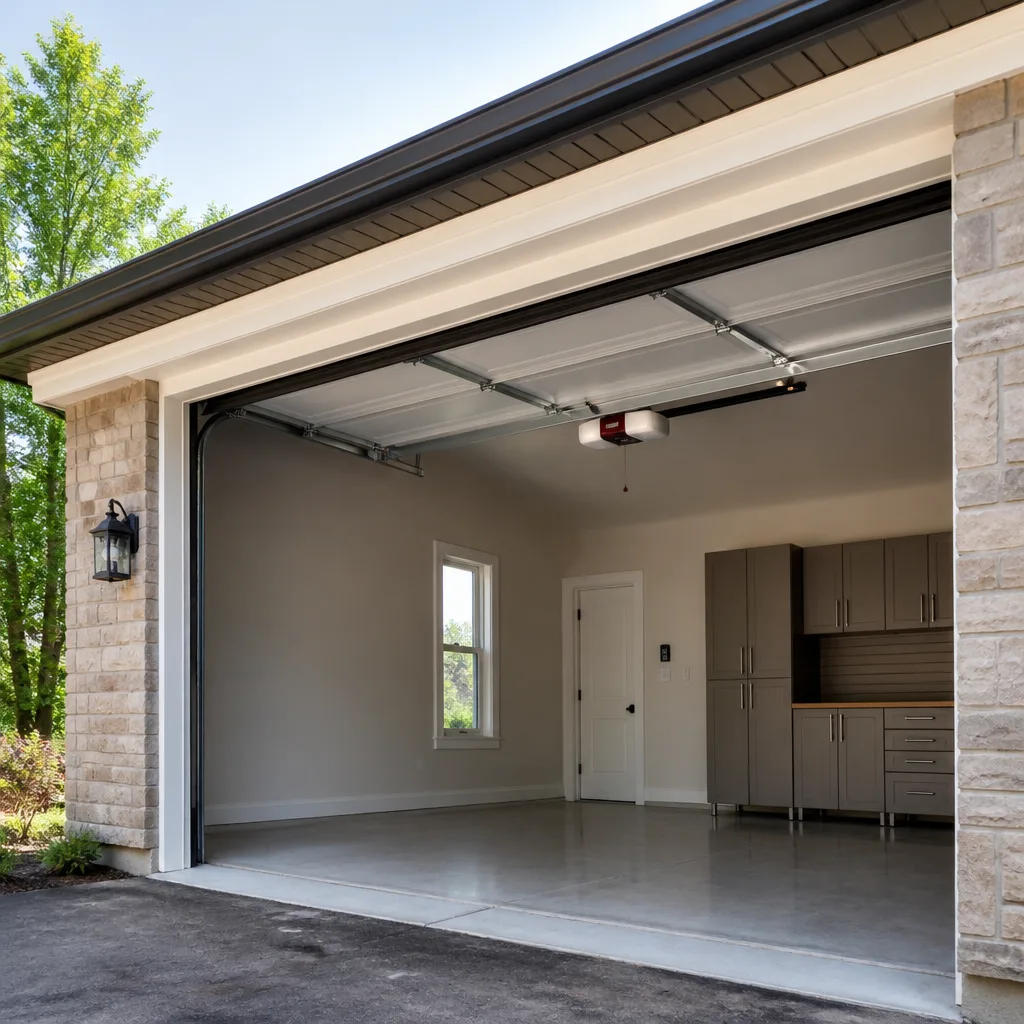 LiftMaster openers
 Chamberlain openers
Full 25-point door and opener safety check with every visit - springs, cables, rollers, tracks, and your LiftMaster or Chamberlain opener included
You get a price before we start. It does not change when the pro arrives.
Get your free estimateGarage Door Warning Signs: A Largo Homeowner’s Reference Guide
That grinding noise your door started making two weeks ago isn’t “just how it sounds now.” It’s a roller or a bearing telling you it has a limited number of cycles left before it seizes, and once it does, the whole door stops behaving. The trap most homeowners fall into is treating garage door sounds and small visual changes as personality quirks of an aging door rather than mechanical distress signals. In Largo’s heat, the window between “it’s a little noisy” and “the door won’t open” runs shorter than it would in a cooler climate, because constant thermal expansion accelerates wear on tracks, springs, and hardware. This guide walks you through what each sound and symptom actually means, which warnings give you a week, which give you a day, and which mean you should stop using the door right now.
Quick Answer
Garage door warning signs worth acting on include grinding, squealing, popping, or rattling sounds, visible rust or white oxidation on springs, a door that drifts down when raised halfway, and tracks that look bowed or misaligned. Signs that justify immediately stopping use of the door are a snapped spring, a door hanging crooked, a cable that’s come loose, or a door that reverses before it reaches the floor. Most of these problems can be repaired, but the cost and safety risk climb sharply once a warning sign is ignored.
Styles & brands we work with
- Raised-panel steel
- Carriage house
- Modern flush
- Full-view glass
- LiftMaster openers
- Chamberlain openers
Table of Contents
- What Each Garage Door Sound Is Telling You
- Visual Warning Signs Specific to Largo’s Climate
- Reading Your Springs: Oxidation, Rust, and the Two-Finger Test
- How Summer Heat Distorts Track Alignment
- Response Time Grading: A Week, This Week, or Today
- The Balance Test and Other Checks You Can Do Safely
- Opener-Side Warning Signs
- When Warning Signs Become Emergency Repairs
What Each Garage Door Sound Is Telling You
Garage door noises aren’t interchangeable, and treating them that way is how homeowners end up replacing an opener when the real problem was a $6 hinge. Each sound maps to a specific point in the mechanical chain, and knowing which point is failing tells you how urgent the repair is. Here’s what we listen for when we inspect a door in Largo.
- Grinding: Usually a dry or seized roller, a bearing on its last legs, or chain wear on an opener. It’s the most common “I’ve been ignoring this for weeks” complaint we hear. If it’s steady rather than intermittent, the roller or bearing is close to failure.
- Squealing: Almost always lubrication-related, but pinpointing the source matters. Hinge pins, torsion bar bearings, and roller stems are the usual suspects. Squealing is often the earliest sign, which means it’s the easiest to fix before it becomes something structural.
- Popping: The most concerning of the routine sounds. Popping usually means a torsion spring has slipped in its anchor or the drum is binding on the cable. Popping is one of the signs that moves a repair from “schedule it” to “call this week.”
- Rattling: Loose hinges, a chain with too much slack, or a top section that’s lost a fastener. Rattling by itself is usually low urgency, but it can indicate the door is working harder than it should, which shortens life on everything else.
What makes Largo different is that our doors cycle far more than winter-cold climates would suggest. Every time you come and go, the door cycles, and heat drives the lubricants that protect rollers and hinges to break down faster. A squeal that would take three months to become a grind in a cooler climate might get there in six weeks here. If the sound is new and consistent, don’t wait for it to feel broken. That’s exactly the kind of decision our garage door repair technicians help with every day.
What “normal” garage door sound actually is
A healthy door makes a low, even hum from the opener, a soft roll as the panels pass over the curved track, and a clean stop at the floor. It should not thump, clatter, or chatter. If you can hear your neighbor’s door open from inside your house, yours is louder than it needs to be. Worth noting: a door that sounds different on a hot afternoon than a cool morning is often just thermal expansion, not a failure. The signal to act is a change that stays consistent across temperatures.
Visual Warning Signs Specific to Largo’s Climate
The rust patterns we see on garage doors in Largo follow the local climate almost like a fingerprint. Humidity and warm temperatures mean oxidation starts earlier and spreads differently than in dry climates. White, chalky oxidation showing on a spring is different from red rust on a hinge, and both are different from rust streaks running down a track.
- Rust streaks on the tracks: When you see rust lines running down the sides of the vertical track, the roller or the hinge mounting is oxidizing. Left alone, the rust builds up and the roller starts dragging, which puts lateral pressure on the track itself. That’s when a door starts to jam.
- Hinge discoloration: Hinges that have gone from a factory finish to a dull orange or brown are a sign that moisture has done its work. Hinge pin binding is one of the most common self-inflicted repairs we get called out to fix after a homeowner has tried to loosen a hinge by force and cracked a panel.
- White oxidation on springs: A chalky white film on a torsion spring is surface oxidation. It’s not an immediate failure signal, but it’s a sign the spring’s finish has deteriorated and the metal underneath is doing its job with less protection than it was designed for. Red or brown rust on a spring is a more serious sign.
- Paint bubbling on the bottom panel: The bottom panel takes the most moisture from the ground and the most sun from below. Bubbling paint means moisture is trapped under the finish. Left alone, it can pit the steel and eventually compromise the structural integrity of the panel.
- Weatherstripping shrinkage: The rubber seal along the bottom of the door is the first line of defense against rain and pests. When it hardens, cracks, or pulls away, water gets in at the base of the door, and that’s where we see the fastest rust growth in Largo.
Clopay and Amarr doors in particular tend to show this pattern earlier because of their steel gauge and finish systems, which is one reason we work on both brands regularly. A door made from heavier steel isn’t immune, but its failure signature is different. If your door is showing two or more of the patterns above, it’s worth a look before the next rainy season pushes them further.
Reading Your Springs: Oxidation, Rust, and the Two-Finger Test
A torsion spring at the top of your door holds the entire weight of the garage door. When it fails, it fails fast and loudly, and the door itself becomes dangerous. The good news is that torsion springs usually give you warning signals weeks or months before they break. Here’s what to check, and what to be careful around.
White oxidation vs. red rust
White oxidation on a spring is a surface change. The metal is still doing its job, but it’s telling you the finish is compromised and the spring is aging. Red or orange rust is a more advanced sign: the metal is losing material, and a rusted spring is more likely to fatigue unevenly. On a garage door, uneven spring fatigue is what produces the popping sounds and the drift you’ll read about below. If a spring has red-brown rust concentrated at the coils near either end, that’s a sign to have it inspected soon.
The two-finger balance test
This is a simple check any homeowner can do, and we walk Largo customers through it every week. Here’s how it works:
- Disconnect the opener using the manual release cord. That’s the red handle hanging from the rail. The door should now be under spring tension only.
- Lift the door with your hands until it’s about halfway up, then stop.
- Let go. A healthy door stays roughly where you left it, maybe drifting a few inches over a minute.
- A door that drops on its own, or that you can’t lift with two fingers once it’s started moving, has a spring or balance problem.
A weak spring is a failing spring. It’s not going to fix itself, and the two-finger test is the clearest signal you’ll get before it snaps. Do not test a door that already feels jammed, has visible damage to a spring or cable, or that makes a popping sound when it moves. Those need a trained technician to look at them, because high-tension springs are under load that can cause serious injury if a DIY repair goes wrong. Dedicated garage door spring repair is one of the most safety-critical services in the industry, and it’s not a job for a YouTube tutorial.
Matched pairs matter
One spring failing doesn’t mean only one needs to go. Torsion springs are engineered to work in pairs. If one has lost tension and the other hasn’t, they’re working against each other, and replacing just one leaves the door unbalanced. A matched pair has to be replaced together to keep the door tracking properly. Any quote that only mentions one spring is a sign to ask a direct question before you agree.
How Summer Heat Distorts Track Alignment
Largo’s summer heat affects metal garage doors and track systems in ways you can see before the door completely jams. As steel heats during the day and cools at night, the tracks, panels, and hardware expand and contract by small fractions of an inch. On a well-installed door, that’s absorbed silently. On a door that’s already out of alignment, the expansion pushes it further out of spec, and that’s when you start seeing symptoms.
What heat-related misalignment looks like
- A gap between the roller and the track: Look at the roller stems where they meet the track. If a roller is sitting off-center, the gap is only visible at certain times of day. If you can see daylight between the roller and the inside of the track, that’s a sign the track has shifted.
- Scuff marks on the track: A shiny band inside the vertical track, at roughly the same height, means the door is rubbing on one side. Left alone, that turns into a full jam during a hot afternoon.
- A door that doesn’t close flush: If the bottom of the door is sitting unevenly on the floor, or one side touches first, the tracks are out of parallel and the door is torquing as it comes down.
- Corners that don’t meet the jamb: A gap at one top corner of the door, especially one that changes with the weather, is a strong sign the track or the panel has shifted.
- Bowed tracks visible from the side: Stand at the side of the door and sight down the vertical track. A gentle curve where there should be a straight line means the track needs realignment.
Heat expansion isn’t the only cause of misalignment. A car nudge, a door closing on an object, or a hinge that’s come loose can produce the same symptoms. But in Largo, heat amplifies whatever weakness is already in the track system. If you notice the door behaves differently as the day heats up, that’s your cue to call. Our Largo Garage Door Repair team handles track alignment and panel adjustment alongside spring and opener work, so a heat-related problem doesn’t need to turn into a whole-door project.
Response Time Grading: A Week, This Week, or Today
Not every warning sign is equally urgent, and treating them all the same either wastes your time or puts you at risk. Here’s how we grade the most common signs. When in doubt, call; a phone assessment is fast and free, and it gives you a clearer picture than guessing from the driver’s seat ever will.
Schedule within a week
- Intermittent squealing or light squeaking (usually lubrication-related)
- Occasional rattling from loose hardware
- Minor rust streaks that aren’t affecting movement
- Weatherstripping that’s hardened or pulling away but still sealing
- A door that’s slightly louder than it used to be but still moves smoothly
Call this week
- Regular grinding or a door that sounds like it’s struggling
- A popping sound on the torsion bar
- A door that drifts more than a few inches when left halfway open
- Visible bowing in a track, or a door that doesn’t close flush
- Opener reversing unexpectedly or lights on the opener unit blinking in an unfamiliar pattern
- A door that’s been manually operated for a while because the opener is failing
Stop using the door today
- A snapped torsion spring (usually a loud noise, then the door won’t lift)
- A door hanging crooked or one side visibly higher than the other
- A cable that’s come off the drum or is visibly frayed
- A door that reverses before reaching the floor
- A bent or broken bottom panel that’s half off its track
- Any door that’s been in a collision with a vehicle, even a slow one
The reasoning behind the grading is mechanical. A grinding roller is wearing down gradually, so you can plan the repair. A popping spring is under load that can fail without warning, so you can’t plan for it. And a door hanging crooked means the lifting system is compromised, so every cycle you run is a cycle that could turn a repair into a replacement or an injury. Emergency garage door service exists for the third category.
The Balance Test and Other Checks You Can Do Safely
You don’t need to be a technician to notice most garage door problems. Here are the checks we recommend to homeowners in Largo, all of which can be done without touching the spring assembly or the cables. Those two components are dangerous, and inspecting them visually is all you should ever do.
- The balance test (already covered above): The single most useful check you can run. If you can’t lift the door with two fingers once it’s started moving, or it won’t stay put halfway up, the door is unbalanced.
- The eye test: Stand outside and look at the closed door. The gap along the bottom should be even, the panels should line up at the seams, and the space on either side should be the same width. Any asymmetry is worth a look.
- The reverse check: With the door closing, wave an object in the path of the safety sensors. The door should reverse. If it doesn’t, the safety system isn’t working, and that’s a “today” issue.
- The sound check: Open and close the door once a week and listen. The most useful signal you’ll ever get from a garage door is a sound that used to be normal suddenly not being normal.
- The manual release check: Every few months, pull the manual release with the door closed, open and close it by hand, then re-engage. It should re-engage cleanly. A release that won’t re-engage is a sign of opener trouble.
- The visual-only spring check: Note any rust, white oxidation, or gaps between coils. If you see anything that looks like a gap in the coil where there shouldn’t be one, call a technician before operating the door again.
The check to never run yourself
Please don’t attempt to adjust a torsion spring. High-tension springs store enough energy to injure a trained person seriously if a winding bar slips, and there’s no home-tool substitute for the winding bars and technique professionals use. The same is true for cable tension. Visual checks only. When in doubt, pick up the phone. That’s what our garage door opener repair and spring teams are here for.
Opener-Side Warning Signs
Your opener is the part of the system most likely to give you clear warning before failing, and it’s also the part most likely to be misdiagnosed. A door that’s slow to open isn’t always a failing opener; sometimes the opener is working harder because something else in the system has gone out of balance. But some signs are opener-specific.
- The opener struggles to lift the door but the door moves smoothly by hand: This points to the opener’s internal gear or the drive assembly rather than the door itself.
- Lights blink or flash in a pattern you don’t recognize: Many openers have diagnostics that report specific fault codes through the light. LiftMaster, Chamberlain, and Genie models all use different blinking patterns, and knowing your brand helps a technician read them faster.
- The opener runs but the door doesn’t move: This usually points to the gear, the chain or belt, or the release mechanism. On a LiftMaster or Chamberlain, the gear-and-sprocket assembly is a common wear point.
- The opener has become noticeably louder: Worn bearings inside the opener or a chain that’s out of adjustment. This is fixable, and catching it early is cheaper than replacing the whole unit.
- Remote or keypad works intermittently: Often a battery or connectivity issue, but on smart openers it can also point to a logic board problem. Genie and Chamberlain smart models both have specific diagnostics that tell the technician whether the issue is at the remote or the receiver.
- The door opens on its own: Rare, but serious. Unplug the opener and call a technician. The safety implications of a self-operating door are obvious.
Craftsman and Wayne Dalton openers and doors, along with the brands listed above, are all part of what we handle, so a firm diagnosis doesn’t require a second opinion from a different provider. We’ll tell you exactly what’s wrong before we touch it, so you’re not choosing between repairing a healthy opener and replacing a failing one based on guesswork.
When Warning Signs Become Emergency Repairs
Emergency garage door service exists because some failures can’t wait. A snapped spring at nine at night, a door that’s come off track and is jammed open, a door hanging crooked and blocking the car in the morning; these aren’t situations you can schedule for next Tuesday. In Largo, the combination of humidity, heat, and often dense residential lots means an open or jammed door also becomes a security issue quickly.
If you’re in an emergency situation, the checklist is short:
- Stop operating the door. Every cycle is another chance for the failure to get worse.
- Don’t try to force it. Forcing a jammed door can crack a panel or bend a track, which turns a repair into a replacement.
- Don’t try to release the door manually if it’s hanging crooked or a cable is off. The door can drop without warning.
- Call for emergency service. We offer emergency garage door service for exactly these scenarios, and the phone assessment tells you what to do while you wait.
Same visit, full fix is what we aim for, so a failure doesn’t turn into a multi-day saga with the door propped open and the car stuck in the driveway. Whether it’s a spring, an opener, or a door off its tracks, one provider handles the whole job.
Common Mistakes to Avoid
- Waiting for the noise to “settle down.” It won’t. A grinding roller or a squealing bearing that’s ignored will seize, and the collateral damage to the track or the panel turns a small repair into a bigger one. In Largo’s heat, this happens faster than you’d expect.
- Spraying WD-40 into the tracks or on the springs. Tracks need a garage-door-specific lubricant, and springs shouldn’t be lubricated at all. WD-40 attracts dust in a way that makes roller problems worse, and it does nothing for a failing spring.
- Replacing one spring instead of the matched pair. We see this often in Largo, usually after a homeowner has a friend-of-a-friend do the repair. The remaining older spring then has to carry double the load until it fails, and the door stays out of balance in the meantime.
- Overriding the safety sensors to make the door close. Sensors that are dirty, misaligned, or failing are a common cause of doors that won’t close. Bypassing them is a safety risk that compounds the original problem.
- Ignoring a door that reverses on its own. This isn’t a nuisance; it’s a signal that either the sensors, the opener’s force settings, or the door’s mechanical balance is off. All three need a professional look.
- Assuming a slow door is an opener problem. A slow or struggling door is often a spring losing tension, and replacing the opener doesn’t fix it. That’s a diagnostic call, not a guess.
- Skipping the post-repair check. After any repair, the door should balance, close flush, and pass the reverse check. If any of those fail, the repair isn’t finished, and that’s worth saying before the technician leaves.
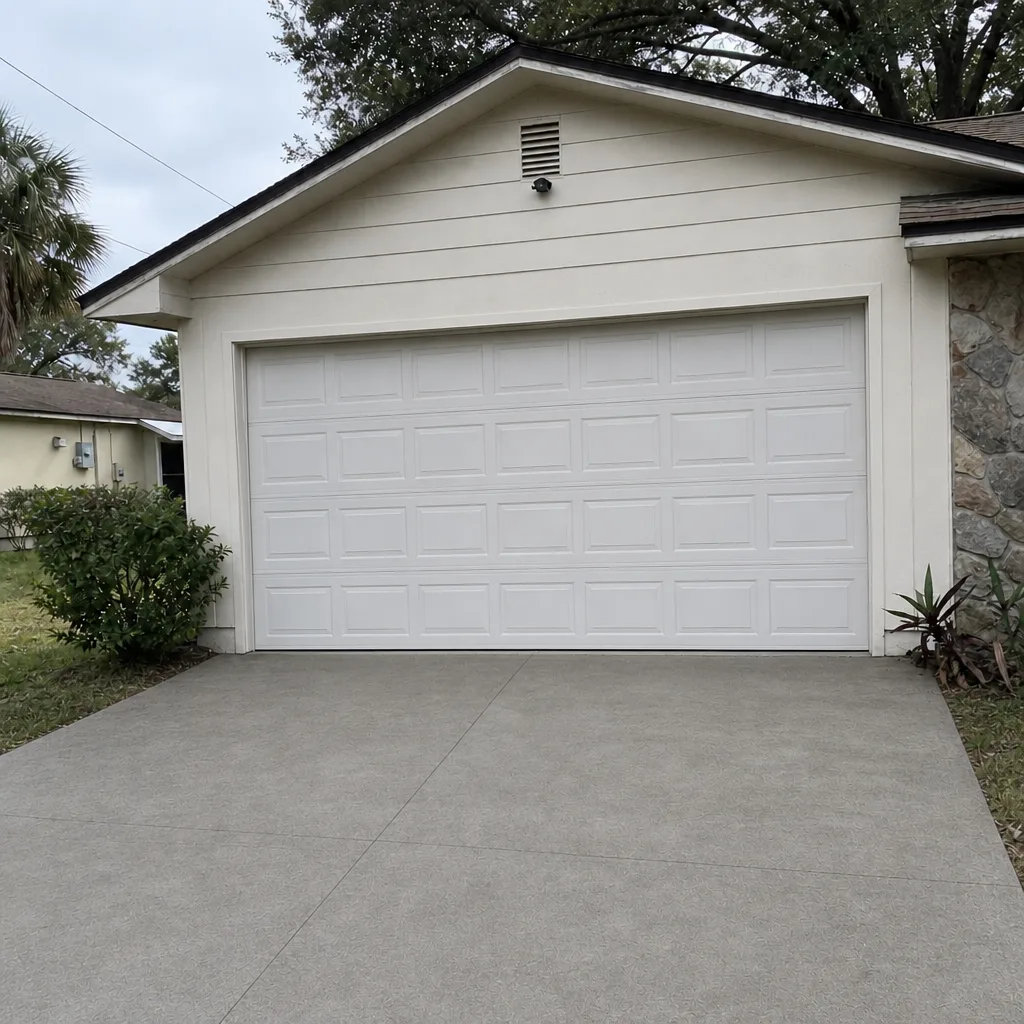
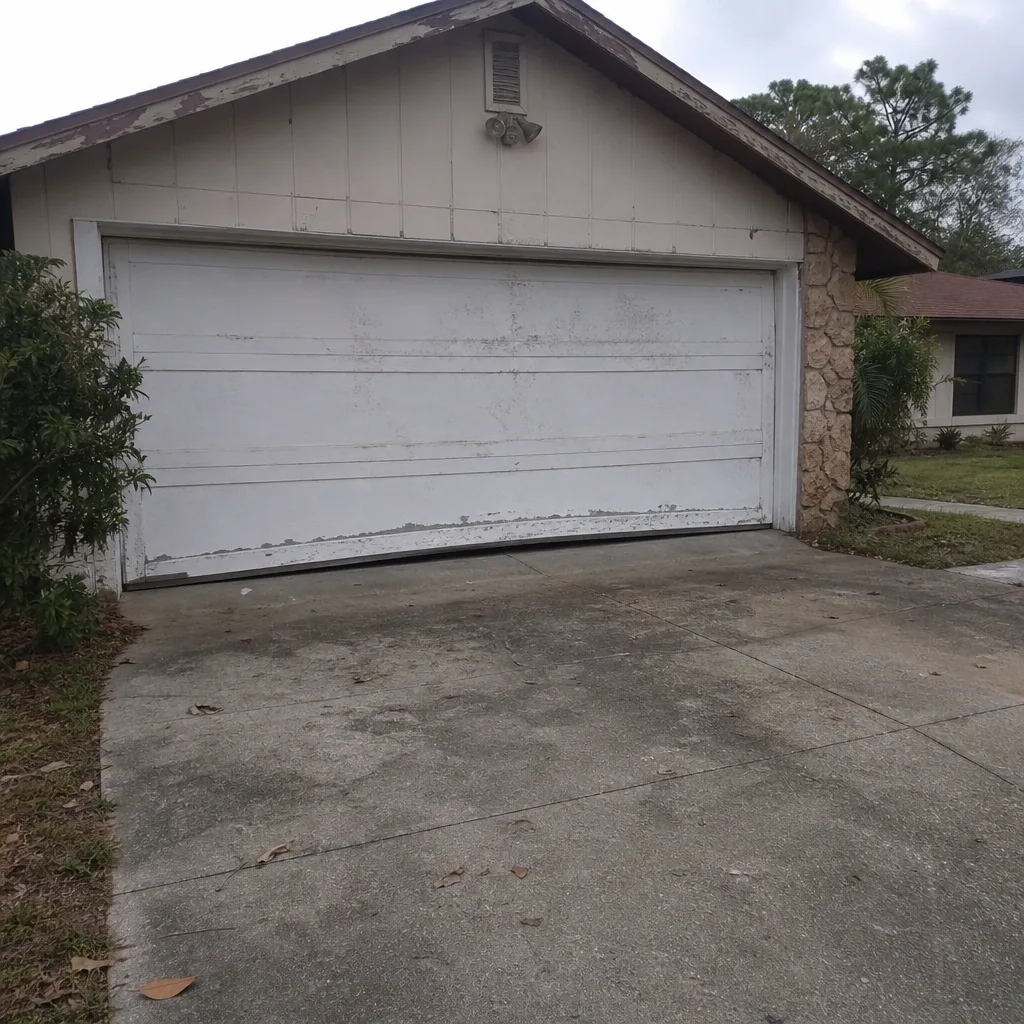
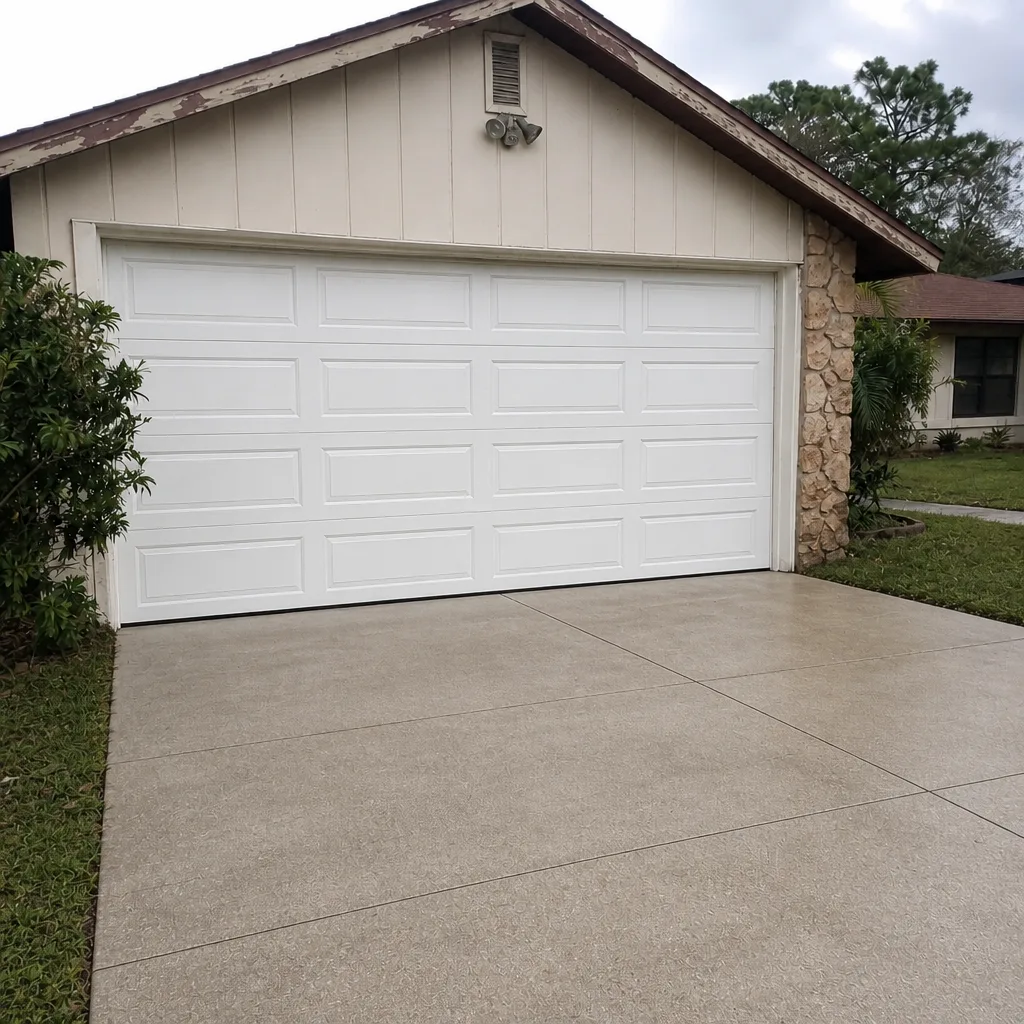
See the difference
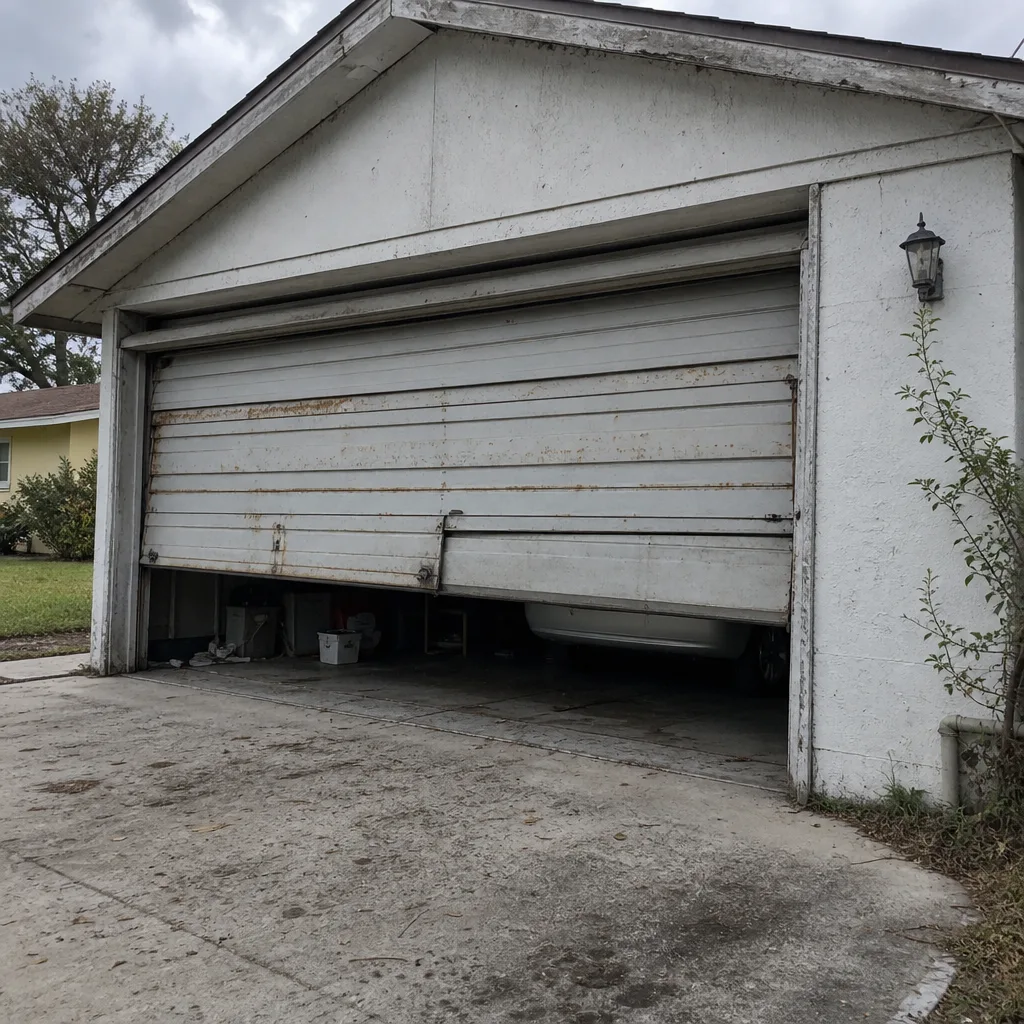 Before
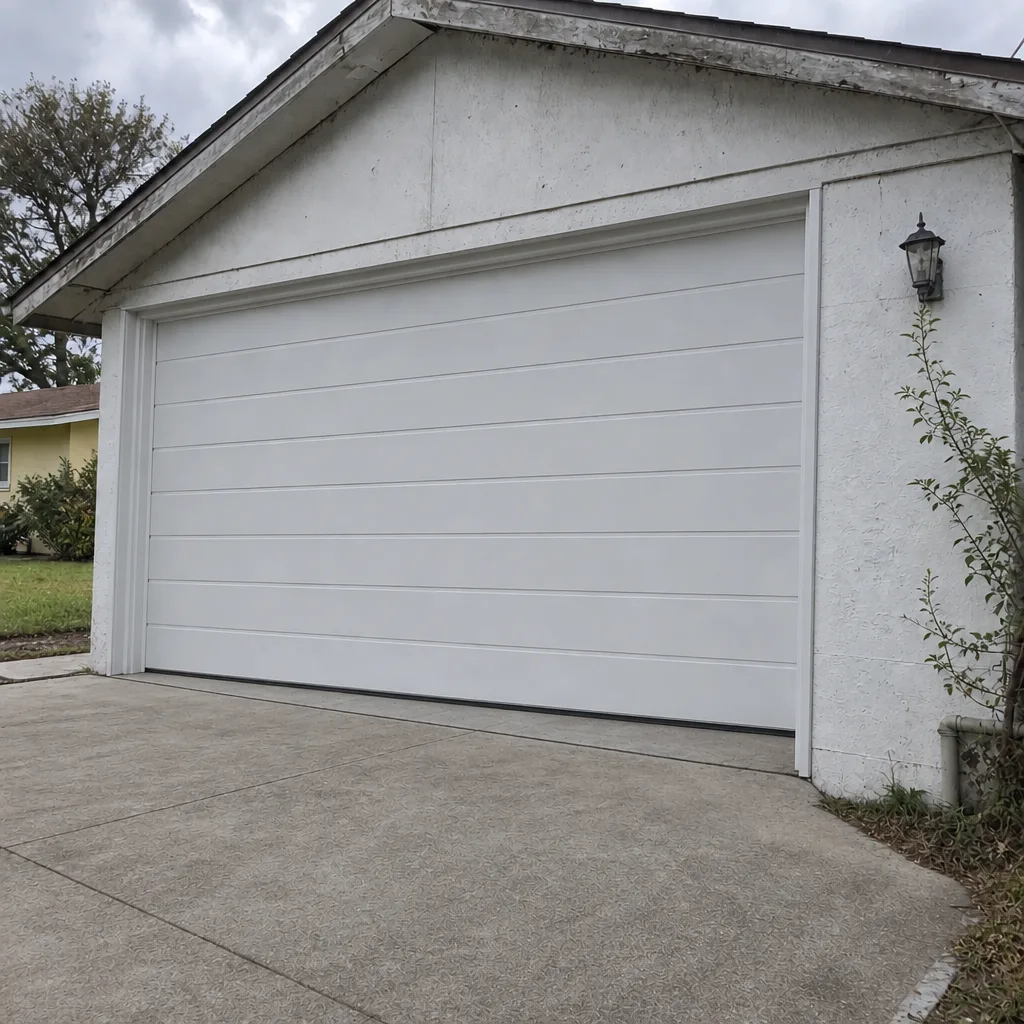 After
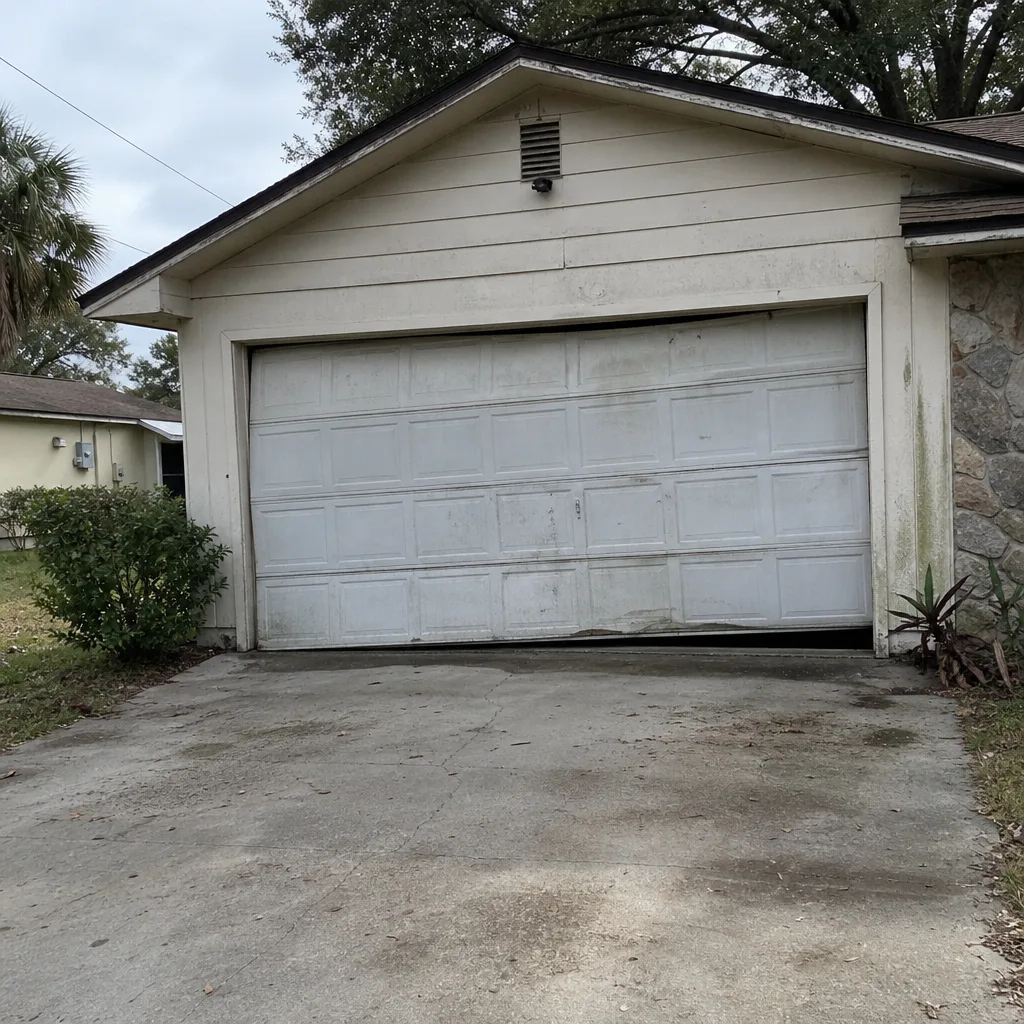 Before
 After
 Before
 After
When to Call a Professional
Call a professional the moment a warning sign crosses into a mechanical or safety category: a snapped spring, a door off its track, a cable that’s come loose, a door hanging crooked, a self-operating door, or a safety reverse system that isn’t working. Call sooner rather than later for regular grinding, popping, or a door that drifts when left halfway. And call for a free assessment if you’re simply not sure which category a symptom falls into, because a five-minute phone call is faster than waiting to see if it gets worse. Largo Garage Door Repair offers free estimates in Largo; call (866) 515-4679 and we’ll tell you what’s wrong before we touch it.
Frequently Asked Questions
The first sign is usually a change in how the door balances. When the door is halfway open and released, it drifts down or drops, or it becomes harder to lift by hand, which is the two-finger test at work. Popping sounds and visible rust on the coils often show up around the same time. Call (866) 515-4679 if the test fails; estimates are free.
You can, but not for long. Grinding almost always means a roller, bearing, or opener drive is wearing, and it will fail on its own schedule rather than yours. Getting it looked at within the week prevents collateral damage to the track or the panels. In Largo’s heat, that window runs shorter than it would in a cooler climate.
Heat makes metal expand, and on a door that’s already slightly out of alignment, that expansion pushes it further out of spec. You’ll see the symptoms in scuff marks inside the tracks, uneven gaps at the bottom of the door, or corners that don’t meet the jamb. These are signs the track needs realignment before the door jams completely.
Cost depends on which part is failing and which brand the door is; a roller replacement and a torsion spring replacement are very different jobs, and pricing is always per job by estimate. We give you a written estimate before any work starts, and that written estimate sets the final price. Call (866) 515-4679 to get an exact quote; estimates are free.
White, chalky oxidation is surface corrosion on the spring’s finish. It’s not an immediate failure signal, but it means the finish has deteriorated and the metal underneath is aging. Red or orange rust is the more serious sign, and if the rust is concentrated at the ends of the coil, have it inspected soon.
The local professional we connect you with is licensed and insured as their state requires. We also work on eight major brands, including Clopay, Amarr, Wayne Dalton, LiftMaster, Chamberlain, Genie, Craftsman, and Raynor, so your specific system is handled without a referral to a second provider. Call (866) 515-4679 with your brand and model when you book.
The Bottom Line
Garage door failures almost always come with warning signs, and the ones that matter most are the ones easiest to dismiss: a new sound, a door that drifts, a bit of rust on a track. In Largo, the heat compresses the timeline, so a sign that would be a next-month repair in a cooler climate is a this-week repair here. Read the sounds, check the balance, look for the rust patterns, and grade the urgency honestly. When it’s time to call, one provider handles the whole system, from opener to spring to panel. Free estimates are available; call (866) 515-4679 today and we’ll tell you exactly what’s wrong before we touch it.
Written by the team at Largo Garage Door Repair.